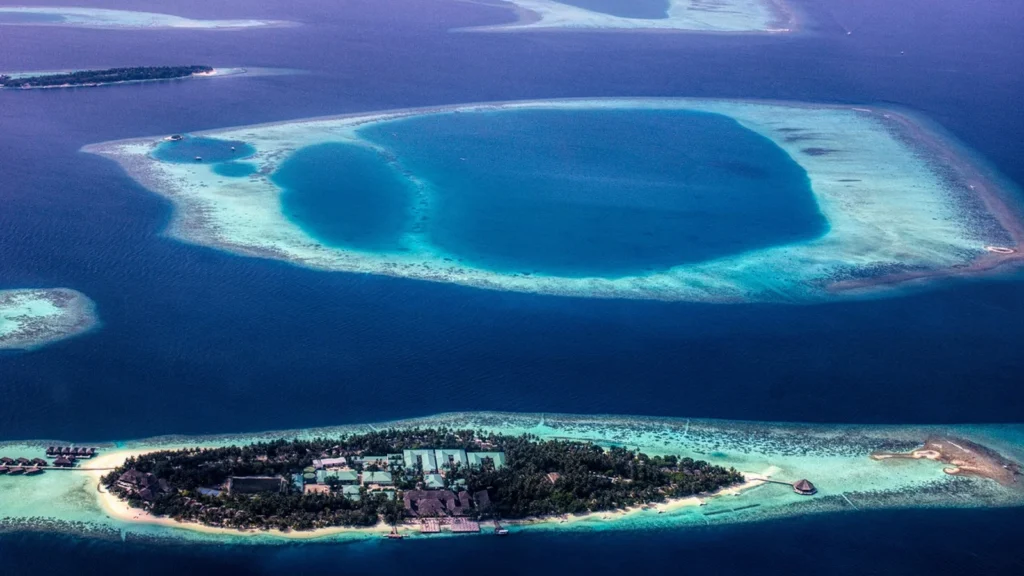
baa atoll local island stays are the smartest way to experience the Maldives without paying resort prices. Baa Atoll is a UNESCO Biosphere Reserve of 75 islands — 13 of them inhabited by roughly 11,000 people — where simple guesthouses cost a fraction of an overwater villa and the famous Hanifaru Bay manta aggregations sit a short boat ride away. For many first-time visitors, a baa atoll local island is the revelation of the whole trip. This 2026 guide compares the best local islands to base yourself on, breaks down ferry, speedboat and flight costs, and shows exactly where your money goes.
Why choose a baa atoll local island base?
Resorts dominate the postcard image of the Maldives, but they start around $900 a night in Baa Atoll. A baa atoll local island guesthouse with a sea view, air conditioning and breakfast typically runs $50–$180 a night instead. You lose the champagne bar and the overwater spa, and you gain something better: a working island where fishermen mend nets, children cycle to school and visitors eat dinner with local families.
Because these are inhabited islands, local rules apply. Alcohol is banned, swimwear is confined to the designated bikini beach, and modest dress is expected in the village. Most travelers find the trade easy — especially when the same baa atoll local island guesthouse can book you onto a Hanifaru Bay snorkel trip for $60–$80 per person, a fraction of the $200+ resort version. If you would rather compare the resort side of the atoll first, our guide to the best luxury resorts in Baa Atoll covers it in detail.
The atoll also carries serious conservation credentials. It was designated a UNESCO Biosphere Reserve in 2011, and the UNESCO Man and the Biosphere listing confirms its role as a model for balancing tourism with reef protection. Staying on a baa atoll local island puts that story within walking distance rather than behind a resort fence.
The baa atoll best local islands to stay on
Four islands carry most of the guesthouse stock, and each suits a different traveler. The baa atoll local island scene is small enough to learn in a week, and rates quoted below are 2026 nightlies for a double room with breakfast unless noted. Every one of these islands is alcohol-free with a bikini beach.
Dharavandhoo island: the airport gateway
Dharavandhoo is the practical heart of budget Baa Atoll. This baa atoll local island hosts the atoll’s domestic airport, so you land and walk to your guesthouse in minutes — no seaplane, no long speedboat leg. The island runs about 1.3 km end to end, roughly 1,000 residents, and more than ten guesthouses with rates from about $50 at simple inns like Dharavandhoo Stay to $180 at boutique properties like Kiha Beach. Hanifaru Bay trips leave from its jetties, which is why most manta-season visitors base here.
Kamadhoo: quiet village life near Hanifaru
Kamadhoo is the low-key alternative, a short ferry hop from Dharavandhoo with a growing cluster of small guesthouses such as CHER Maldives, Silver Bay and Kamadhoo Inn. It suits travelers who want a baa atoll local island with a working-village atmosphere, a house reef off the bikini beach, and easy boat access to both Hanifaru Bay and the Dharavandhoo jetties without paying airport-island prices.
Eydhafushi: the atoll capital experience
Eydhafushi is Baa Atoll’s administrative capital and its largest population center, so this baa atoll local island offers the most services: a hospital, shops, the atoll school and guesthouses like Ale Sara Guest and Moonshell Residence. It is a practical base on the western side of the atoll, connected to Malé by scheduled ferry, and better suited to travelers who value infrastructure over beach-hut seclusion.
Kendhoo and Maalhos: ferry-connected alternatives
On the atoll’s northern edge, Kendhoo and Maalhos are served by public ferries rather than flights, which keeps nightly rates among the lowest in Baa Atoll. They are the pick for slow travelers who want a genuinely quiet baa atoll local island and do not mind a longer transfer from Malé — and both sit within reach of the atoll’s best house reefs.
How to get to baa atoll from male
Every route to a baa atoll local island starts at Velana International Airport in Malé. From there you have three realistic options — domestic flight, scheduled speedboat or public ferry — and the right pick depends on your budget, your patience and your arrival time. The distance is about 117 km north across open water.
Domestic flights: the fastest route
Maldivian, Manta Air and Flyme fly Malé to Dharavandhoo Airport (DRV) in roughly 20–40 minutes, with one-way fares typically $110–$170 depending on season and how early you book. Flights are the default for reaching a baa atoll local island: you land, walk to your guesthouse and are on the water the same afternoon. Book two to three weeks ahead for the July–October manta peak.
Speedboat male to baa atoll: the budget route
Scheduled speedboat operators such as Ocean Rider connect Malé with Baa Atoll in about two to two and a half hours, charging roughly $65–$70 per person one way. It is the cheapest comfortable way to reach a baa atoll local island, and it keeps running through weather that would ground small planes less often than you would expect. The trade-off is a long, bumpy open-water crossing and a fixed timetable that rarely matches late international arrivals.
The male to baa atoll ferry: cheapest but slowest
MTCC public ferries reach the atoll’s northern and western islands, including Maalhos (about 2 h 40 min) and Eydhafushi (about 2 h 30 min), with departures most days but no service on Fridays. From Eydhafushi a local ferry continues to Dharavandhoo in about 25 minutes for around MVR 50 (roughly $3). It is the slowest way to a baa atoll local island, and for many travelers the best value in the country.
| Transfer option | Time from Malé | One-way cost (per person) | Best for |
|---|---|---|---|
| Domestic flight to Dharavandhoo | 20–40 min | $110–$170 | Speed, convenience, manta-season trips |
| Scheduled speedboat (Ocean Rider) | 2–2.5 h | $65–$70 | Budget travelers with flexible timing |
| MTCC public ferry via Eydhafushi/Maalhos | 2.5–3.5 h + local boat | About $25–$40 total | The cheapest crossing, slow-travel fans |
| Private speedboat charter | 1.5–2 h | On request | Groups splitting the cost |
Prices are 2026 indicative rates gathered from operators and ferry guides; confirm current schedules before booking, especially around Friday closures and monsoon cancellations.
baa atoll guesthouse prices and what is included
Nightly rates across the baa atoll local island scene generally run $50–$120 for a simple air-conditioned double with breakfast, climbing toward $180 for boutique properties with sea views and pools. Expect a green tax of $6 per person per night on top of the rate, collected by the guesthouse. Most properties quote per room, not per person, so doubles are the value sweet spot.
Breakfast is almost always included, lunch and dinner are not: local cafés charge $8–$18 for a generous plate, while guesthouse half-board typically adds $15–$25 per person per day. Excursions are the real variable cost — dolphin cruises, sandbank picnics and dive trips run $25–$50, and a guided Hanifaru Bay snorkel is $60–$80 including the bay fee. A realistic week for two, including flights from Malé, rooms, meals and three or four excursions, lands around $1,100–$2,500 depending on the property.
If you are comparing islands before you book, our cheap Maldives islands guide breaks down where a dollar stretches furthest, and the Maldives complete travel guide ties the whole country together. The same guesthouse model done well in neighboring Alif Alif Atoll is worth a look if you are island-hopping beyond Baa.
baa atoll vs south ari atoll
The two classic Maldives wildlife atolls solve different problems. South Ari Atoll is the whale shark capital: sightings run year-round around Dhigurah and the resort islands, with a steady, predictable tourist strip that is easy to plan but busier on the water. Baa Atoll is the manta capital — seasonal, spectacular and concentrated around Hanifaru Bay between June and November, with a quieter baa atoll local island and village-based guesthouse scene the rest of the year.
Choose South Ari if whale sharks are the non-negotiable priority and you want year-round odds. Choose Baa if you want the chance of hundreds of feeding mantas in a single snorkel, a UNESCO setting, and lower nightly costs on local islands. Our South Ari whale shark booking guide covers the other side of that decision in detail.
When to go: weather and manta season
Baa Atoll is warm all year, with average highs of 28–30°C and lows around 26–27°C. February is the driest month with barely 18 mm of rain on average, while October is the wettest at roughly 327 mm. The southwest monsoon from May to November brings the rain — and the plankton blooms that feed the mantas.
The official visitor access window for Hanifaru Bay currently runs 1 May to 1 December, with manta aggregations strongest from July to September. If you want peak wildlife, aim for August or September and accept some rain. If you want dry, calm weather and do not mind missing the aggregations, February to April is the sweet spot for a baa atoll local island holiday built around beaches, diving and village life.
Hanifaru Bay rules and booking tips
Hanifaru Bay is a regulated marine protected area, and the rules are enforced rather than suggested. Only licensed operators may bring visitors in, scuba diving is banned, sessions are capped at roughly 45 minutes, and touching or chasing mantas and whale sharks carries fines. The Maldives Protected Areas portal publishes the current access period and operator list for anyone visiting a baa atoll local island for the mantas.
Book through your guesthouse rather than on arrival: the same trip that costs $200+ from a resort typically runs $60–$80 from Dharavandhoo, including the bay fee, because local boats skip the resort commission. For the full season calendar, permit details and the best times of day, our dedicated Hanifaru Bay best time to visit guide is the companion read.
Frequently asked questions
How far is baa atoll from male airport?
Baa Atoll lies about 117 km north of Velana International Airport. By domestic flight to Dharavandhoo the journey takes 20–40 minutes in the air; by scheduled speedboat it is two to two and a half hours; and by public ferry plus local boat it can stretch past four hours. For most visitors, the flight is worth the premium.
Can I reach a baa atoll local island without flying?
Yes. MTCC ferries from Malé serve Maalhos and Eydhafushi, with connections onward to Dharavandhoo and Kamadhoo, and scheduled speedboats run the same corridor for about $65–$70 one way. Just note that ferries do not run on Fridays, so build that into your arrival plans and your baa atoll local island itinerary.
When is the best time to visit a baa atoll local island?
For manta rays and the Hanifaru Bay aggregations, go between June and November with July to September at the peak. For dry weather, calm seas and lower guesthouse rates, go in February or March. Either way, book flights and the first nights of accommodation well ahead — the atoll is small and the best baa atoll local island rooms sell out first.
Rates and schedules in this guide were checked against guesthouse listings, ferry operators and official Maldives sources for 2026. Confirm prices directly before booking, and see the Wikivoyage Baa Atoll guide for independent on-the-ground logistics.