Hanifaru Bay best time to visit is the critical question for anyone hoping to witness the world’s largest manta ray feeding aggregations in the Maldives’ first UNESCO Biosphere Reserve. This horseshoe-shaped bay in Baa Atoll hosts seasonal plankton blooms that draw hundreds of reef manta rays and whale sharks — a natural spectacle National Geographic has called “the world’s largest manta ray feeding station.” Understanding the Hanifaru Bay best time to visit window, logistics, and regulations is essential for planning a successful trip to see this Hanifaru Bay best time to visit phenomenon.
Why Hanifaru Bay for Manta Rays & Whale Sharks
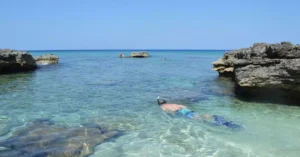
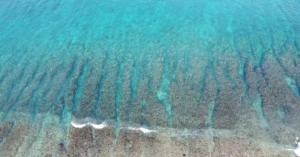
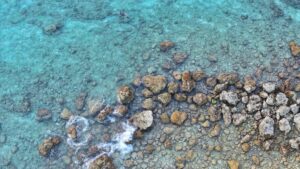
Hanifaru Bay is a small, horseshoe-shaped lagoon on the eastern edge of Baa Atoll, measuring roughly 1.2 km across at its widest point. What makes it globally unique is its geometry: the bay’s shape and orientation create a natural plankton trap during the southwest monsoon (May–November). Incoming tidal currents funnel nutrient-rich water into the bay, where it circulates and concentrates plankton — the primary food source for reef manta rays (Mobula alfredi) and whale sharks (Rhincodon typus). This unique topography makes the Hanifaru Bay best time to visit coincide perfectly with these oceanographic conditions.
According to the Baa Atoll Wikivoyage guide, Hanifaru Bay is “where, in season, the world’s largest groupings of manta rays occur, inside a UNESCO protected biosphere reserve.” The bay was designated a UNESCO Biosphere Reserve in 2011, and the Maldives government strictly regulates access: snorkeling only (no scuba), maximum 80 visitors at any time, and mandatory guides. This protection ensures the spectacle remains intact for future generations while providing the Hanifaru Bay best time to visit experience of a lifetime.
Baa Atoll itself consists of three natural atolls (southern Maalhosmadulu, Fasdūtherē, and Goifulhafehendhu) with 75 islands, 13 inhabited, and a population of over 11,000. The atoll’s capital is Eydhafushi, but the gateway islands for Hanifaru Bay are Dharavandhoo (with domestic airport DRV) and Dhonfanu — both a 15–20 minute speedboat ride from the bay. Understanding how to get to Hanifaru Bay via Dharavandhoo is essential for trip planning. The baa atoll manta ray season drives significant tourism to these gateway islands during peak months.
Best Time to Visit Hanifaru Bay for Manta Rays
The Hanifaru Bay best time to visit for manta rays and whale sharks is June through November, with peak aggregations typically August–October. This coincides with the southwest monsoon (Hulhangu) when lunar-tidal cycles and monsoon currents create the plankton blooms that attract megafauna. The baa atoll manta ray season is driven by these oceanographic conditions. However, this is also the wetter season. Based on Open-Meteo climate archive data for Baa Atoll (coordinates 5.10°N, 72.92°E), here are the monthly averages:
| Month | Avg Max Temp | Avg Min Temp | Total Rainfall | Rain Days | Manta Activity |
|---|---|---|---|---|---|
| January | 27.5°C | 25.8°C | 101.7mm | 19/31 | Very Low — Dry season, few mantas |
| February | 27.9°C | 26.6°C | 6.9mm | 5/28 | Very Low — Driest month, minimal plankton |
| March | 28.4°C | 26.6°C | 98.0mm | 21/31 | Low — Transition, occasional mantas |
| April | 29.4°C | 27.4°C | 50.0mm | 20/30 | Low — Pre-monsoon, variable |
| May | 29.4°C | 27.3°C | 223.2mm | 22/31 | Moderate — Monsoon onset, plankton building |
| June | 29.3°C | 27.5°C | 201.6mm | 22/30 | High — Strong currents, good aggregations |
| July | 28.9°C | 26.9°C | 144.5mm | 24/31 | Very High — Peak lunar cycles, consistent |
| August | 29.0°C | 27.1°C | 118.0mm | 17/31 | Peak — Best month overall for numbers |
| September | 28.7°C | 26.2°C | 386.0mm | 27/30 | High — But wettest period, visibility lower |
| October | 28.5°C | 26.1°C | 482.8mm | 29/31 | High — Late season, still good aggregations |
| November | 28.5°C | 26.1°C | 400.5mm | 28/30 | Moderate — Season ending, fewer mantas |
| December | 28.7°C | 26.5°C | 273.4mm | 31/31 | Low — Transition to dry season |
Key insight: The Hanifaru Bay best time to visit balances manta abundance against weather. August offers the best compromise — peak manta numbers with relatively lower rainfall (118mm vs 482mm in October). July is a close second.
If you prioritize perfect weather over maximum manta counts, February–April offers dry, sunny conditions but only occasional manta sightings. Water temperature remains 28–30°C year-round; a 3mm shorty wetsuit or rash guard is sufficient. The baa atoll manta ray season peak coincides with the wettest months, so travelers must weigh their priorities when choosing their Hanifaru Bay best time to visit dates. Remember, the Hanifaru Bay best time to visit is not just about manta numbers — it’s about the overall experience including weather, visibility, and crowd levels.
For photographers, the Hanifaru Bay best time to visit for optimal lighting is early morning (6:30–8:30 AM) when the sun angle illuminates the mantas’ white bellies as they barrel-roll. Late afternoon (4:00–5:30 PM) offers golden-hour backlighting for silhouette shots. The baa atoll manta ray season lunar cycle also matters — new and full moon periods (spring tides) create stronger currents and denser plankton concentrations, drawing larger manta aggregations. Planning your Hanifaru Bay best time to visit around these lunar windows can dramatically increase your chances of witnessing 50+ mantas feeding simultaneously.
Many travelers ask about the Hanifaru Bay best time to visit for specific lunar phases. New moon and full moon periods (typically 2–3 days before and after) produce the strongest tidal flows, which concentrate plankton at the bay entrance where mantas gather to feed. During the baa atoll manta ray season, these lunar windows can produce aggregations of 80–100+ mantas. If your Hanifaru Bay best time to visit dates are flexible, aim for a trip that spans a new or full moon during July–October for the highest probability of massive aggregations.
Whale Sharks at Hanifaru Bay
While manta rays are the main attraction, whale shark baa atoll encounters at Hanifaru Bay add another dimension to the experience. Whale sharks (Rhincodon typus) are drawn to the same plankton blooms that attract mantas. During peak baa atoll manta ray season (June–November), whale sharks appear on approximately 30–40% of visits. They tend to arrive later in the season (August–October) when plankton density is highest.
Unlike mantas that feed in coordinated chains at the surface, whale sharks feed more erratically, often vertically. Snorkelers should maintain 4m distance and avoid blocking their path. Seeing a whale shark alongside dozens of mantas is the ultimate Hanifaru Bay best time to visit bonus. This combination makes the Hanifaru Bay best time to visit even more rewarding for wildlife enthusiasts.
How to Get to Hanifaru Bay
Reaching Hanifaru Bay requires a two-step journey: international flight to Malé (MLE), then domestic transfer to Baa Atoll. The primary gateway is Dharavandhoo Airport (DRV). Understanding how to get to Hanifaru Bay is the first step in trip planning.
Flight Options: Malé to Dharavandhoo
Malé (MLE) → Dharavandhoo (DRV): Daily flights operated by Maldivian Airlines (30 minutes, ATR-72/Dash-8). Typical schedule: depart MLE 08:30–09:30, return DRV 11:00–12:00. Fares: MVR 2,500–4,000 (USD 160–260) one-way. Book 2–3 weeks ahead during peak baa atoll manta ray season (Aug–Oct). Baggage: 20kg checked + 5kg carry-on; excess MVR 50/kg (USD 3.25/kg). This is the primary how to get to Hanifaru Bay route for most visitors.
Speedboat Transfers to Hanifaru Bay
From Dharavandhoo, resorts and guesthouses arrange speedboat transfers to Hanifaru Bay (15–20 minutes, typically included in packages). From Dhonfanu (another gateway island), it’s 10–15 minutes. Some liveaboards include Hanifaru Bay as a day stop during Baa Atoll itineraries (7–10 nights from Malé). No public ferry serves Hanifaru Bay directly — it’s a protected marine area accessible only by authorized boats. The how to get to Hanifaru Bay logistics are straightforward once you reach Dharavandhoo or Dhonfanu.
Resort Seaplane Transfers
Luxury resorts in Baa Atoll (Soneva Fushi, Four Seasons Landaa Giraavaru, Amilla, Anantara Kihavah, Finolhu) offer direct seaplane transfers from Malé (30–40 minutes, USD 500–800 return). These include speedboat shuttles to Hanifaru Bay for guests. If staying at a resort, this is the most seamless how to get to Hanifaru Bay option, eliminating the domestic flight leg entirely.
Hanifaru Bay Snorkeling Rules & Experience
The Maldives Environmental Protection Agency (EPA) and Baa Atoll UNESCO Biosphere Reserve Office enforce strict rules to protect the manta rays and whale sharks during the Hanifaru Bay best time to visit window:
- Snorkeling only — No scuba diving allowed in the bay (diving permitted at nearby sites like Dharavandhoo Thila).
- Maximum 80 visitors at any time — Managed via timed entry slots (typically 2-hour windows).
- Mandatory certified guide — Every group must have a Biosphere Reserve-certified guide (resorts provide).
- No touching, chasing, or riding — Maintain 3m distance from mantas, 4m from whale sharks.
- No flash photography — Natural light only; flashes disturb feeding behavior.
- Reef-safe sunscreen only — Oxybenzone/octinoxate prohibited.
- Entry fee: MVR 300 (USD 20) per person per visit, paid to Biosphere Reserve Office.
A typical visit: speedboat from your island to the bay entrance → briefing by guide → 60–90 minutes snorkeling with mantas (often 20–50 individuals feeding in chains) → return. Whale sharks appear less predictably but are seen on 30–40% of visits during peak baa atoll manta ray season. The experience of watching dozens of 3–4 meter mantas barrel-rolling in unison through dense plankton clouds is widely considered one of the world’s top wildlife encounters. This makes the Hanifaru Bay best time to visit a bucket-list moment for marine wildlife enthusiasts.
Where to Stay for Hanifaru Bay Access
Your accommodation choice determines daily logistics for Hanifaru Bay best time to visit snorkeling trips:
Luxury Resorts (Seaplane from Malé, All-Inclusive Hanifaru Access)
| Resort | Transfer | Hanifaru Access | Price Range (USD/night, 2026) |
|---|---|---|---|
| Soneva Fushi | 30-min seaplane | Private speedboat, marine biologist guide | USD 1,500–3,500+ |
| Four Seasons Landaa Giraavaru | 35-min seaplane | Dedicated manta research boat, Marine Savers team | USD 1,200–2,800 |
| Amilla Maldives | 30-min seaplane | Speedboat shuttle, in-house marine biologist | USD 900–2,200 |
| Anantara Kihavah | 30-min seaplane | Daily Hanifaru trips, underwater restaurant | USD 1,000–2,500 |
| Finolhu | 30-min seaplane | Speedboat shuttle, casual vibe | USD 700–1,800 |
| Dusit Thani | 35-min seaplane | Marine center, guided snorkeling trips | USD 800–2,000 |
Guesthouses on Dharavandhoo & Dhonfanu (Budget-Friendly)
- Dharavandhoo guesthouses: 10+ options (e.g., Dharavandhoo Inn, Manta Ray Guesthouse, Baa View). Rates: MVR 1,200–2,500/night (USD 78–160) including breakfast. Speedboat to Hanifaru: 15 min, typically USD 30–50/person per trip (arranged by guesthouse).
- Dhonfanu guesthouses: Fewer options, closer to bay (10 min). Rates similar. Best for maximizing daily Hanifaru visits during baa atoll manta ray season.
- Eydhafushi (capital): More guesthouses, but 30–40 min speedboat to bay — less convenient for early morning slots.
Liveaboards (Multi-Atoll Itineraries Including Hanifaru)
7–10 night liveaboards from Malé covering Baa, Raa, Lhaviyani atolls. Typical Hanifaru Bay day: 2–3 snorkeling sessions (morning, midday, afternoon). Prices: USD 2,000–4,500 for 7 nights including all meals, dives/snorkels, transfers. Best for divers wanting to combine Hanifaru snorkeling with Baa Atoll dive sites (Dharavandhoo Thila, Nelivaru Haa, Dhigali Haa). This option maximizes time in the water during the Hanifaru Bay best time to visit window. Choosing a liveaboard for your Hanifaru Bay best time to visit trip ensures maximum manta ray encounters.
2026 Cost Breakdown for Hanifaru Bay Trip
| Expense | Guesthouse (7 nights) | Mid-Range Resort (5 nights) | Luxury Resort (5 nights) |
|---|---|---|---|
| International Flights | Variable | Variable | Variable |
| Domestic Flights (MLE↔DRV return) | USD 320 | USD 320 | N/A (seaplane) |
| Seaplane Transfer (return) | N/A | N/A | USD 600–800 |
| Accommodation (full board) | USD 550–1,120 | USD 3,500–5,000 | USD 6,000–14,000 |
| Hanifaru Bay Trips (5 visits × USD 50) | USD 250 | Included | Included |
| Biosphere Entry Fees (5 × USD 20) | USD 100 | Included | Included |
| Speedboat Transfers (guesthouse) | USD 150 | Included | Included |
| Equipment Rental (mask, fins, wetsuit) | USD 70–140 | USD 50–100 | Included |
| Travel/Dive Insurance | USD 80–120 | USD 80–120 | USD 80–120 |
| Total (excl. international flights) | USD 1,520–2,100 | USD 3,950–5,220 | USD 6,680–14,920 |
Prices based on 2025–2026 rates. Guesthouse assumes double occupancy; solo travelers add ~50% for single supplement. Resort prices vary significantly by room category (beach vs overwater vs pool villa). Book 4–6 months ahead for August–October peak baa atoll manta ray season. Booking during the Hanifaru Bay best time to visit window requires early planning.
Hanifaru Bay vs. Other Maldives Manta Ray Sites
Hanifaru Bay is unique for surface-feeding aggregations, but other sites offer manta encounters. Understanding alternatives helps contextualize the Hanifaru Bay best time to visit decision:
| Site | Atoll | Experience Type | Best Season | Access | Crowd Level |
|---|---|---|---|---|---|
| Hanifaru Bay | Baa | Snorkeling — mass surface feeding (20–100+ mantas) | Jun–Nov (peak Aug–Oct) | Domestic flight + speedboat | Managed (80 max) |
| Dharavandhoo Thila | Baa | Scuba — cleaning station, 5–15 mantas | Year-round | Speedboat from Dharavandhoo | Low |
| Kuredu Express (Lhaviyani) | Lhaviyani | Scuba — channel, mantas + sharks | Year-round | Seaplane/speedboat | Moderate |
| Manta Point (South Ari) | South Ari | Snorkel/Scuba — cleaning station, 3–10 mantas | Year-round | Speedboat from resort | High |
| Fesdu Lagoon (Raa) | Raa | Night snorkel — cyclone feeding, 20–50 mantas | May–Nov | Resort speedboat | Low |
Verdict: For the Hanifaru Bay best time to visit spectacle of mass feeding, Hanifaru is unmatched globally. For scuba-based cleaning station encounters, Dharavandhoo Thila (same atoll, year-round) is excellent and combinable. The baa atoll manta ray season makes Hanifaru the crown jewel, but Dharavandhoo Thila offers a year-round alternative for scuba divers. Planning your Hanifaru Bay best time to visit around the peak season ensures the best possible experience.
Practical Information
Visa & Entry Requirements
Per Wikivoyage and Maldives Immigration: Free 30-day tourist visa on arrival for all nationalities. Requirements: passport valid 6+ months, confirmed accommodation, return/onward ticket, proof of funds (USD 100+/day). Complete IMUGA arrival declaration online within 96 hours pre-arrival (imuga.immigration.gov.mv). Plan your Hanifaru Bay best time to visit trip with these requirements in mind.
Health & Safety
- Dive/snorkel insurance: Required (DAN, DiveAssure). Nearest hyperbaric chamber: Malé (30-min flight from DRV).
- Vaccinations: Routine + Hepatitis A, Typhoid recommended. Dengue occurs — bring DEET repellent.
- Malaria: Not present (WHO certified malaria-free since 1984).
- Sun protection: Equatorial UV index extreme. Reef-safe SPF 50+, rash guard, hat essential.
- Emergency: 911 (police/ambulance/fire/coast guard), +960 3322211 (flight info).
Connectivity, Money & Time Zone
- Mobile: Dhiraagu/Ooredoo tourist SIM at MLE airport (MVR 200–300 / USD 13–20 with 10–20GB). 4G works on Dharavandhoo/Dhonfanu.
- Currency: Maldivian Rufiyaa (MVR), pegged ~15.42 MVR/USD. USD widely accepted at resorts.
- ATMs: Bank of Maldives ATM in Eydhafushi; bring cash for guesthouse islands.
- Time zone: Indian/Maldives (GMT+5), no DST.
- Language: Dhivehi (official); English spoken by all tourism staff.
Sample 5-Day Hanifaru Bay Itinerary (Guesthouse Base)
- Day 1 — Arrival & Orientation: MLE→DRV morning flight. Transfer to Dharavandhoo guesthouse. Afternoon: house reef snorkel, Baa Atoll visitor center visit. Sunset at Dharavandhoo beach.
- Day 2 — First Hanifaru Bay Visit: 07:00 speedboat to bay (early slot for best light). 2-hour guided snorkel with mantas. Return 10:30. Lunch. Afternoon: Dharavandhoo Thila scuba dive (cleaning station mantas) or house reef snorkel. Evening: local dinner.
- Day 3 — Peak Manta Day: 06:30 departure for morning plankton bloom. Extended 2.5-hour session (book double slot). Picnic lunch on boat. Return 13:00. Rest. Sunset drone photography (resort guests only) or beach walk.
- Day 4 — Whale Shark Search & Cultural Day: Morning: dedicated whale shark search at known aggregation zones near Dhonfanu. Afternoon: visit Eydhafushi (capital) — lacquer work at Thulhaadhoo, local market, Baa Atoll museum. Farewell dinner.
- Day 5 — Departure: Early breakfast. DRV→MLE flight. International connection (allow 3+ hours in Malé).
Frequently Asked Questions
Do I need scuba certification for Hanifaru Bay?
No. Hanifaru Bay is snorkeling only by law. You only need basic swimming ability and comfort in open water. Life jackets provided. Scuba divers can visit nearby Dharavandhoo Thila (cleaning station) on the same trip — Advanced Open Water recommended for the 25–30m depth.
What if I visit outside manta season (December–May)?
You’ll have better weather (less rain, calmer seas) but manta sightings are rare and unpredictable — perhaps 1–2 individuals at cleaning stations. Whale sharks are also scarce. For Hanifaru Bay best time to visit specifically for mantas, June–November is essential. The baa atoll manta ray season dictates the experience.
Can I visit Hanifaru Bay as a day trip from Malé?
Not practically. Earliest MLE→DRV flight arrives ~10:00; latest DRV→MLE departs ~11:00. This leaves only a 1-hour window — insufficient for transfers, briefing, and the 2-hour bay slot. Minimum 2 nights (1 full day) required; 4–5 nights recommended for multiple visits during the baa atoll manta ray season.
Is Hanifaru Bay suitable for children or non-swimmers?
Children 10+ who are confident swimmers can participate with a guide and life jacket. Non-swimmers can observe from the boat (mantas often feed near surface). Many resorts offer “manta watch” boat trips for non-snorkelers. The bay is shallow (3–15m) and sheltered, but currents at the entrance can be strong. Plan your family trip around the Hanifaru Bay best time to visit for the best experience.
Related TravelStar360 Articles
- Swimming with Whale Sharks in South Ari Atoll: 2026 Tour Prices & Booking Guide
- Best Whale Watching Destinations 2026: Complete Guide
- Best Whale Watching Guide 2026: Destinations & Seasons
- Galapagos Marine Animal Experiences: Ultimate Wildlife Guide
- Best Wildlife Cruises for Unforgettable Encounters
All prices and schedules verified against open sources as of 2026. Confirm current rates directly with operators before booking. Weather data sourced from Open-Meteo archive (2023 annual records for coordinates 5.10°N, 72.92°E). Country facts from Wikivoyage Baa Atoll and Maldives guides. No affiliate links or commercial tracking URLs included. Plan your Hanifaru Bay best time to visit adventure today. The Hanifaru Bay best time to visit is June through November for peak manta ray encounters.