If you are pricing samarkand solo travel cost per day, start with one truth. Samarkand is affordable, but not free.
Your budget changes fast with hotel choice, taxi use, and season. I once paid too much for a short ride because I skipped the meter question.
This guide gives realistic daily costs for 2026. It also covers crowd patterns, transport timing, and the small mistakes that raise spending.
What Samarkand Costs for a Solo Traveler in 2026
A solo day in Samarkand can fit three budget levels. The city works well for shoestring, mid-range, and comfort travel.
For a samarkand solo budget, expect these daily ranges.
| Budget Style | Daily Cost | Best For |
|---|---|---|
| Low budget | $25–$40 | Hostels, shared transport, simple meals |
| Mid-range | $45–$80 | Private room, taxis, museum entries |
| Comfort | $90–$150+ | Boutique stays, more taxis, better dining |
These numbers assume one traveler. They also assume normal sightseeing, not luxury shopping.
“Check hotel rates for Friday and Saturday first.” Local demand jumps on weekends.
“Carry small notes for taxis and snacks.” Change can be awkward at busy stands.
For city context, Uzbekistan remains one of Central Asia’s easiest value destinations.
Official Uzbekistan tourism site
Where Your Money Goes Each Day
Most solo travelers spend on five things. Bed, food, transport, entry fees, and small extras.
Here is a realistic daily split.
- Bed: $12–$35 for budget to mid-range rooms.
- Food: $8–$20 for casual meals and tea.
- Transport: $2–$12, depending on taxi use.
- Attractions: $10–$30 for major sites and museums.
- Extras: $3–$10 for water, snacks, and SIM top-ups.
The old city layout helps. Many key sights sit within a short taxi ride. Some are walkable in cooler months.
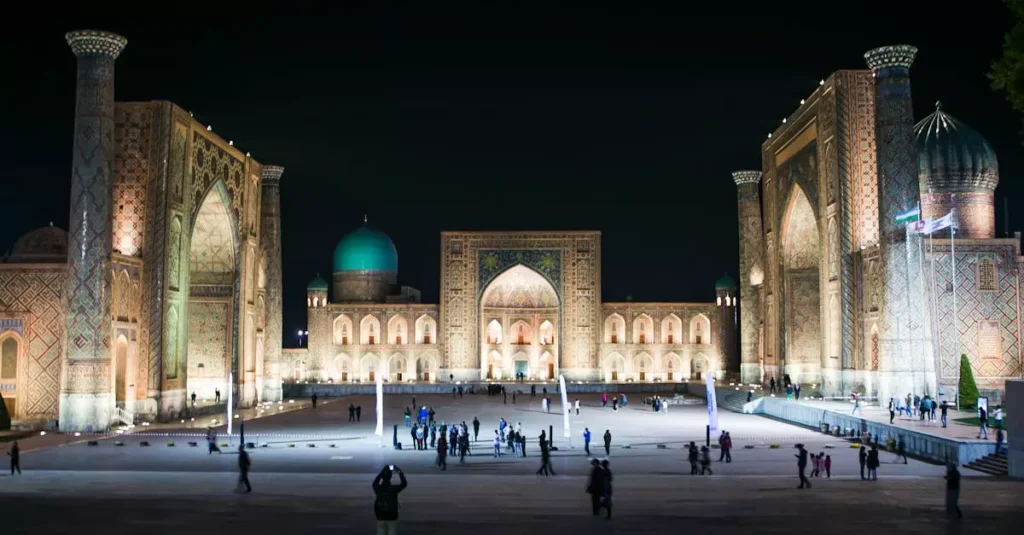
Samarkand’s main monuments are not spread out like a modern capital. But distances still matter. Registan to Gur-e-Amir is about 2 kilometers. Registan to Shah-i-Zinda is roughly 3 kilometers by road.
For background on the country, see this reference overview.
Food, Tea, and Cafe Prices in Samarkand
Food is one of the easiest places to save money. It is also where solo travelers overspend on hotel breakfasts.
A simple lunch can cost $3–$6. A better restaurant meal may cost $8–$15. Plov is usually the safest value choice.
Tea houses often charge less than tourist cafes. A pot of green tea may cost under $1.50. Fresh bread is cheap and filling.
I made one mistake here. I ordered near Registan at peak lunch time. The service was slower, and the bill was higher.
Crowds build late morning and again near sunset. That is when tour groups and day visitors arrive. Quiet meals are easier before 11:30 a.m.
“Eat lunch 30 minutes before the tour buses arrive.” You will get faster service and better seating.
“Ask for the local menu, not the English menu.” The price gap can be real.
Getting Around Samarkand Without Wasting Cash
Transport is cheap if you plan it well. It gets expensive when you hail random cars repeatedly.
City taxis often cost $1.50–$4 for short hops. Longer cross-town rides may reach $5–$8. Ride-hailing apps can help with price clarity.
Walking works best for clustered sights. The old center is manageable in the morning. Heat changes everything after noon.
From the airport to central Samarkand, a taxi usually takes 15–25 minutes. From the train station, expect 10–20 minutes to many hotels.
High-speed trains from Tashkent to Samarkand are a smart budget move. They save a hotel night and reduce stress.
For national heritage and site context, this official source is useful.
Samarkand Solo Travel Cost Per Day by Season
Season changes matter more than many travelers expect. Spring and autumn bring the best weather. They also bring higher hotel prices.
Summer is hot. Daytime walking can feel exhausting. You may spend more on taxis and water.
Winter is cheaper. It can also feel quiet around some sites. That means better room rates and fewer crowds.
Here is the pattern.
- March to May: Higher prices, pleasant weather, heavier crowds.
- June to August: Lower room rates, intense heat, more indoor breaks.
- September to November: Strong demand, ideal sightseeing weather.
- December to February: Best bargains, cold mornings, calm streets.
Eco-taxes and tourist fees can appear in some stays in 2026. Always check the final booking total.
Rail upgrades in Uzbekistan are improving regional travel. That can shift hotel demand near stations and city centers.
For broader country facts, this reference is reliable.
Reality Check: What Solo Travelers Often Underestimate
Samarkand is budget-friendly, but not every cost is obvious.
Many solo travelers underestimate taxi frequency. They also forget bottled water, entry fees, and small cash-only purchases.
Another common issue is timing. Midday heat slows sightseeing. That can push you into extra cafe stops and more taxi rides.
Some attractions have better value when grouped. Spreading them across many short trips costs more.
Also, not every driver uses the same price logic. Confirm the fare before entering.
That one habit protects your samarkand solo budget better than any coupon.
Pros and Cons of a Solo Budget Trip in Samarkand
- Pros: Major sights are close enough for efficient planning.
- Pros: Food is affordable and filling.
- Pros: Taxis are cheap for short rides.
- Pros: Winter and summer can bring lower hotel prices.
- Cons: Peak-season rooms rise fast.
- Cons: Heat can increase transport and drink costs.
- Cons: Tourist zones may charge more than local areas.
- Cons: Cash management still matters.
Important Tips for Keeping Your Daily Budget Low
“Book one hotel near the main monument cluster.” It cuts taxi spending fast.
“Use the train for arrival days whenever possible.” It is cheaper than a longer city transfer plus fatigue.
“Visit Shah-i-Zinda early, then Registan late.” This reduces heat and avoids the heaviest tour-group rush.
“Keep one emergency taxi budget of $5 daily.” It prevents overspending when plans change.
“Buy water from neighborhood shops, not landmark corners.” Prices are usually better away from entrances.
Best Daily Budget Scenarios for Different Travelers
If you want the cheapest workable day, target $30–$40. Stay in a simple room, eat local food, and walk between nearby sites.
If you want comfort without waste, plan $55–$75. That covers a private room, a few taxis, and decent meals.
If you like flexible comfort, budget $90+. That gives you room to move, rest, and choose better restaurants.
For many solo travelers, $50–$65 feels balanced. It allows comfort without turning the trip expensive.
That range also handles small surprises. Those are common in any historic city.
FAQ
How much is the average samarkand solo travel cost per day?
Most solo travelers spend $45–$80 daily in 2026.
How can I save money on transport in Samarkand?
Group sights by area and use taxis less often.
Why does the samarkand solo budget change by season?
Hotel demand, weather, and crowd levels all shift costs.
When is the cheapest time to visit Samarkand?
Winter usually offers the lowest room rates.
How do I avoid overpaying for meals?
Choose local cafes, ask for prices first, and avoid landmark frontage.
Final Thoughts on Solo Spending in Samarkand
Samarkand rewards careful planning. It is easy to enjoy without spending heavily.
Keep your days clustered. Watch taxi use. Eat local. Travel early.
If you track the small costs, your budget stays stable. And your trip feels calmer.
Use this guide to set a realistic daily number before you go. Then adjust it for your travel style, not someone else’s.