Istanbul taxi fare price matters fast when you land tired. The city is huge. Traffic can change a short ride into a long wait.
I learned that the hard way near Taksim. The meter looked normal, but the jam moved at walking pace. My coffee went cold before we crossed the bridge area.
If you are planning Istanbul transport cost in 2026, this helps. You will see real ranges, common routes, and the traps that catch first-time visitors.
What Istanbul Taxi Fare Price Means in 2026
Istanbul uses metered taxis. That sounds simple. In practice, traffic changes everything.
Most rides start with a base fare. Then the meter adds distance and time. Slow traffic adds cost too.
For short city trips, expect low-to-mid double digits in euros or the local lira equivalent. For airport rides, the total can rise quickly.
The main issue is not the meter alone. It is the route, congestion, and pickup point.
In 2026, Istanbul still has heavy demand in tourist zones. Taksim, Sultanahmet, Kadıköy, and Beşiktaş stay busy all day.
"Check the meter before the car moves, and ask for the official taxi class if you want fewer surprises."
Typical Istanbul Transport Cost by Route
Here is a practical view of common trip patterns. These are planning ranges, not fixed quotes.
| Route | Approx. Distance | Typical Time | Relative Cost |
|---|---|---|---|
| Sultanahmet to Taksim | 6-8 km | 20-40 min | Moderate |
| Galata to Kadıköy | 12-15 km | 30-60 min | Moderate to high |
| Istanbul Airport to Taksim | 35-40 km | 45-90 min | High |
| Sabiha Gökçen to Kadıköy | 30-35 km | 40-80 min | High |
| Short neighborhood ride | 2-4 km | 10-20 min | Low |
Airport rides cost more because of distance and traffic. The bridge or tunnel choice also matters. A bad hour can double your time.
For budget planning, compare taxis with metro, ferry, and airport buses. Taxis win on convenience. Public transit wins on price.
How Istanbul Taxis Work on the Street
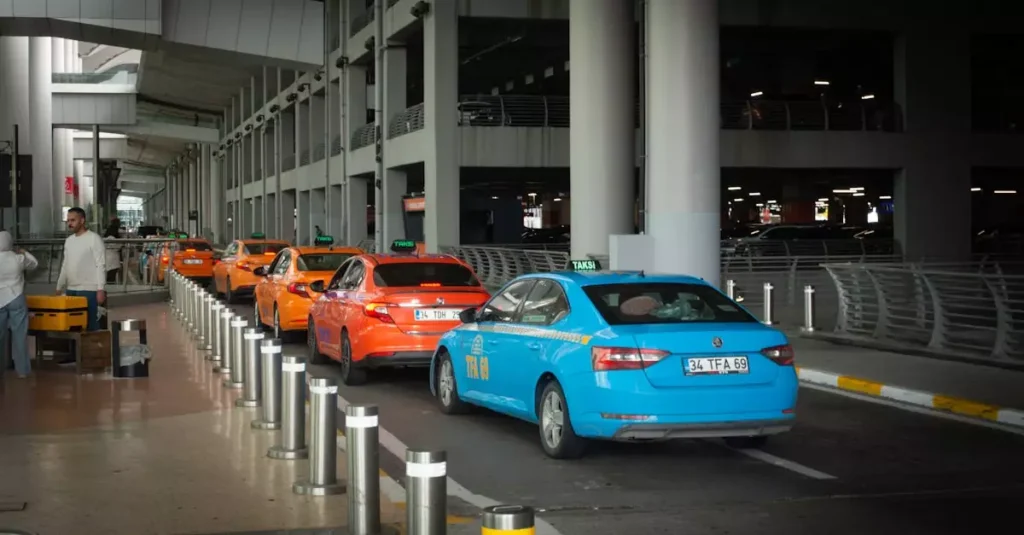
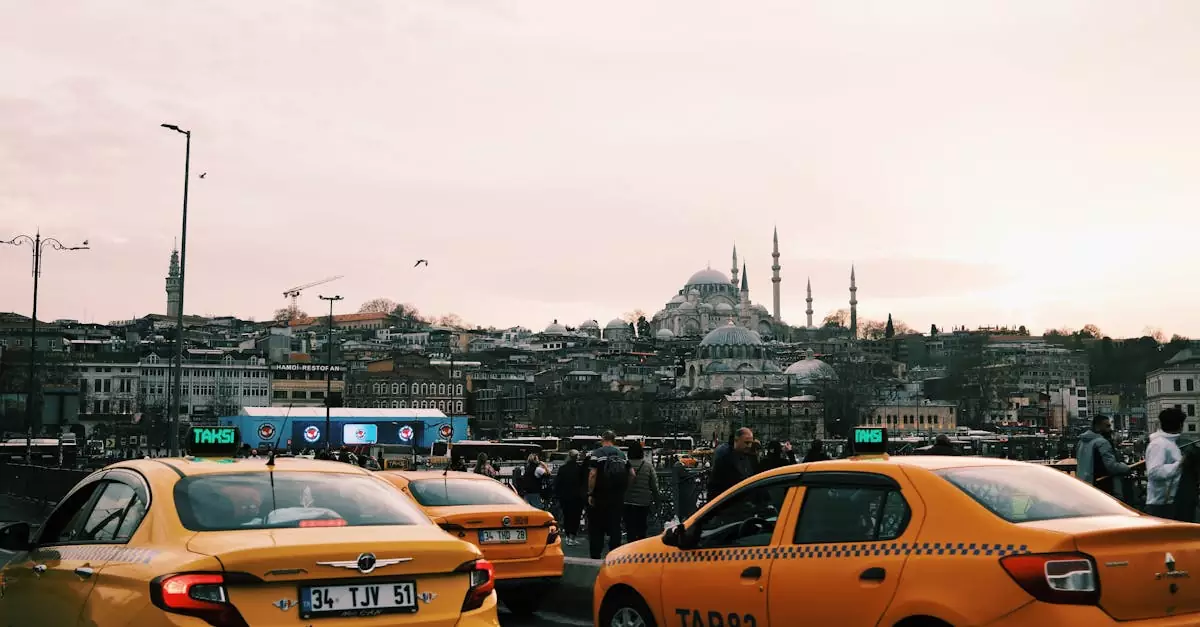
Istanbul has several taxi colors. Yellow is the standard option. Turquoise and black cars cost more, but offer better comfort.
Most visitors use yellow taxis. They are easiest to find. They are also the most price-sensitive during busy periods.
Drivers usually prefer direct routes. Some know the fastest roads well. Others may avoid traffic with side streets.
That can help. It can also add confusion if you do not know the city.
Use the route map on your phone. Keep it visible. That reduces misunderstandings.
Rides from ferry piers often move faster than airport pickups. The crowd is different too. Ferry areas feel more local. Airports feel more transactional.
"Use the BiTaksi app for price visibility, but confirm the plate number before entering."
Where Taxi Prices Rise Fastest
Some places in Istanbul push taxi costs higher. The reason is simple. Traffic and demand spike together.
Taksim at rush hour is a classic example. So is the Bosphorus corridor before sunset.
Weekend evenings are worse. Rain also changes everything. When it rains, everyone wants a taxi at once.
Summer adds another layer. Tourist numbers rise. Cruise days add more pressure around the old city and port areas.
Winter has fewer crowds. But icy roads and slower traffic still raise meter time.
Expect higher totals near big events, football matches, and Friday evening departures.
"If rain starts, book early or walk to a less crowded pickup street."
Airport Transfers and the Real Cost of Convenience
Airport taxis are often the first expense after landing. They are easy. They are not always cheap.
Istanbul Airport to central districts can take under an hour or well over ninety minutes. That depends on traffic and the exact drop-off point.
Sabiha Gökçen usually serves the Asian side better. A European-side hotel can mean a longer, pricier ride.
For families, luggage changes the value equation. A taxi may still beat multiple transit changes.
For solo travelers, the airport bus or metro may save a lot. The tradeoff is time, stairs, and crowding.
In 2026, many travelers also compare taxi cost against eco-taxes and higher city transport fees in Europe. Istanbul still feels competitive by comparison.
Important Tip: "Take a screenshot of your hotel address in Turkish before leaving the airport."
Important Tip: "If you arrive late, use official pickup points only, not random curb offers."
Pros and Cons of Taking a Taxi in Istanbul
Taxis are useful in Istanbul. They are not perfect.
- Pros: direct door-to-door travel.
- Pros: useful with luggage or kids.
- Pros: good for late-night returns.
- Pros: faster than transit on some cross-city routes.
- Cons: traffic can make fares unpredictable.
- Cons: peak hours raise stress and waiting time.
- Cons: some drivers avoid short rides.
- Cons: language gaps can cause route confusion.
My biggest mistake was assuming a short ride stayed short. In Istanbul, a few kilometers can turn into a long crawl.
That is why timing matters as much as distance.
Best Ways to Save on Istanbul Transport Cost
Combine transport modes when possible. That is the smartest move.
Use ferries for scenic cross-city trips. Use metro for predictable airport links. Save taxis for late arrivals, heavy bags, or awkward connections.
Walk short segments before hailing a car. Sometimes a 10-minute walk cuts the fare meaningfully.
Travel outside rush hour when you can. Morning before 7:30 is usually calmer. Late morning can also be better than late afternoon.
In tourist season, book your hotel near a transit node. That reduces taxi dependence immediately.
For 2026 planning, also watch for ETIAS-related Europe trip routing if Istanbul is part of a bigger itinerary. Many travelers now stack Turkey with Schengen travel more carefully.
"Cross the Galata Bridge on foot if your ride is only one district away."
How to Judge a Fair Ride Before You Enter
Look at the car condition. Check the meter. Confirm the destination.
Small details matter. A clean dashboard often signals a more professional ride. A working meter matters even more.
If the driver hesitates on the route, ask which road they plan to use. That helps you judge whether the trip makes sense.
Do not panic over every extra minute. Istanbul traffic is real. Sometimes the delay is normal.
Still, you should know the difference between traffic and detour.
Keep some cash ready. Card acceptance is better than before, but not universal.
Also, note the plate number. It helps if you need to report a problem later.
Reality Check: "A cheap-looking fare can become expensive if traffic locks up for thirty minutes."
Useful External Resources for Istanbul and Turkey Travel
For basic country background, see Britannica’s Turkey overview.
For a quick reference page, use Wikipedia’s Turkey entry.
For official tourism planning, visit GoTürkiye.
For broader tourism context, see Tourism in Turkey.
FAQ: Istanbul Taxi Fare Price and Transport
How much should I budget for Istanbul taxi fare price in 2026?
Budget more for airport trips and rush hour. Short inner-city rides are usually much cheaper than cross-city transfers.
Why does Istanbul transport cost change so much?
Traffic, distance, time of day, and pickup zone all affect the meter. Rain and weekends can raise costs too.
When is the best time to take a taxi in Istanbul?
Mid-morning and early afternoon are often easier. Late-night rides can be smoother than evening rush hour.
How can I avoid overpaying for a taxi in Istanbul?
Use the meter, confirm the route, and avoid unofficial pickups. Keep your destination written in Turkish.
Why do airport taxis feel more expensive than city rides?
They cover long distances and face heavier traffic. Toll roads and bridge routes can also add time and cost.
Conclusion: Plan the Ride, Not Just the Fare
Istanbul rewards travelers who plan transport early. The taxi system is useful. It is also shaped by traffic and timing.
If you know the route, you can judge the price better. If you know the crowd patterns, you can avoid the worst delays.
Use taxis when comfort matters. Use transit when budget matters. The best trip usually mixes both.
Before your next ride, check the map, check the meter, and check the clock. That simple habit saves money and stress.