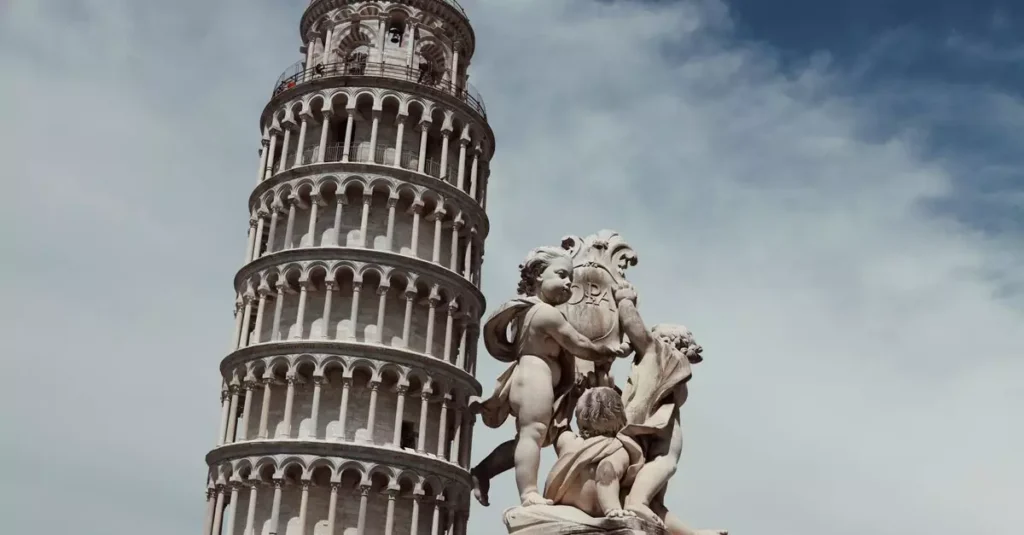
While the Leaning Tower of Pisa is an undeniable icon, Italy’s architectural landscape is home to other intriguing structures that defy gravity. This article ventures beyond the familiar to uncover the unique leaning towers Italy architecture has to offer. Discover the compelling stories behind these tilted marvels, from the medieval power struggles evident in Bologna’s Due Torri to the poignant histories embedded in lesser-known campaniles. We’ll explore the architectural styles that define them, the engineering challenges that caused their lean, and the remarkable efforts to preserve them. Prepare to see Italy from a new, slightly askew perspective as we journey through these captivating treasures.
The Iconic Leaning Tower of Pisa: An Architectural Marvel
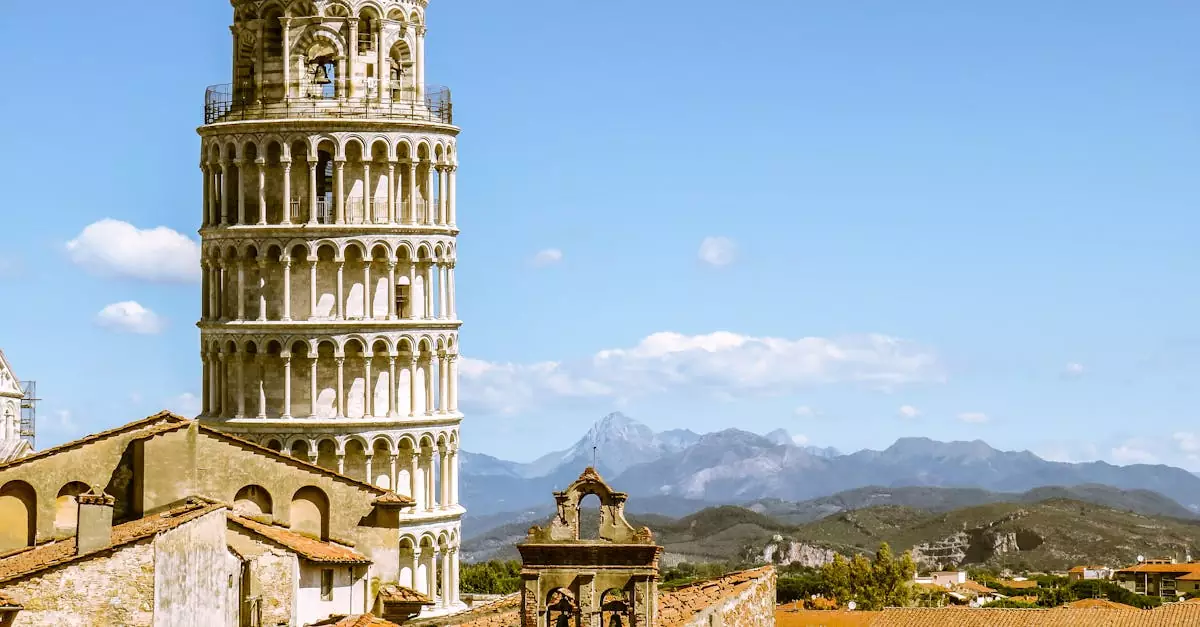
The Leaning Tower of Pisa stands as a globally recognized symbol of Italy’s rich architectural heritage and engineering challenges. While its iconic tilt is its most famous characteristic, understanding its origins and appreciating its context within the surrounding cityscape offers deeper insight into this remarkable structure.
Understanding the Pisa Tower’s Famous Tilt: Causes and Engineering
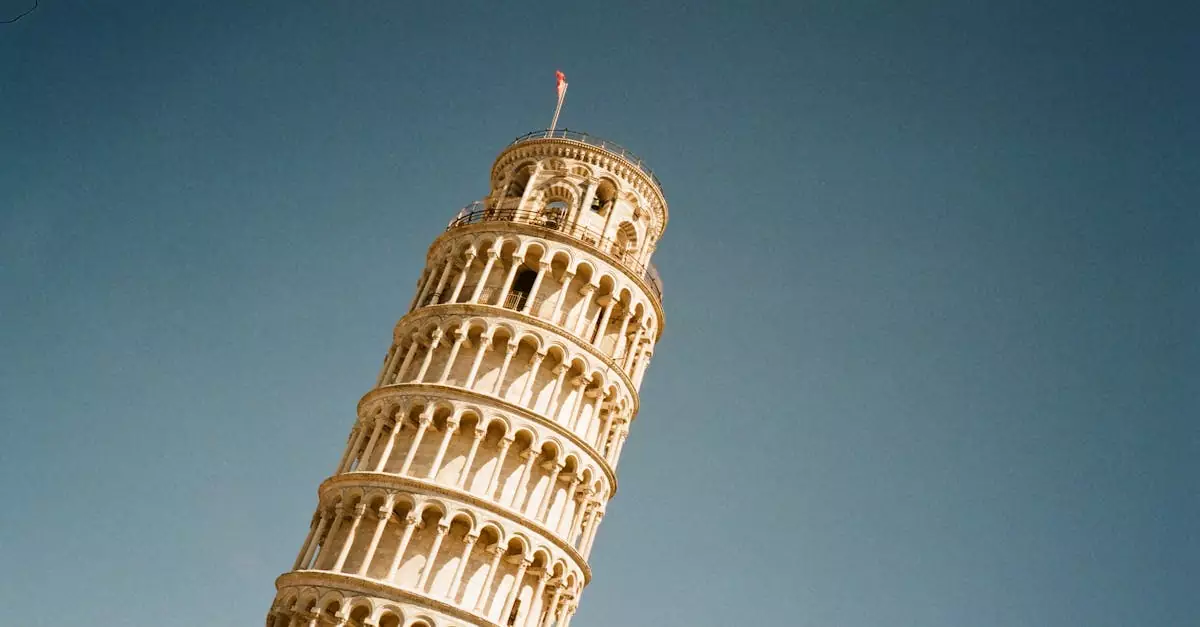
The famous lean of the Pisa Tower is not a deliberate design feature but rather a consequence of its construction and the unstable subsoil beneath it. Construction began in 1173 on a foundation only three meters deep, laid on soft clay, sand, and shells. By the time the third story was completed in 1178, the ground had already begun to shift, causing the tower to tilt to the north. Construction halted for nearly a century, allowing the soil to compact and preventing an immediate collapse. When work resumed in 1272, builders attempted to compensate by making the new stories taller on the sinking side, resulting in a slight curve to the tower.
Further complications arose during its completion in the 14th century when the bell chamber was added, exacerbating the lean. Over the centuries, the tilt continued to increase, reaching a critical point in the late 20th century. Extensive stabilization efforts, completed in 2001, involved removing soil from beneath the raised side, reducing the lean by 45 centimeters and ensuring its stability for the foreseeable future. This complex engineering feat showcases the ingenuity required to preserve such a historic monument.
Exploring the Piazza dei Miracoli and Its Surrounding Romanesque Architecture
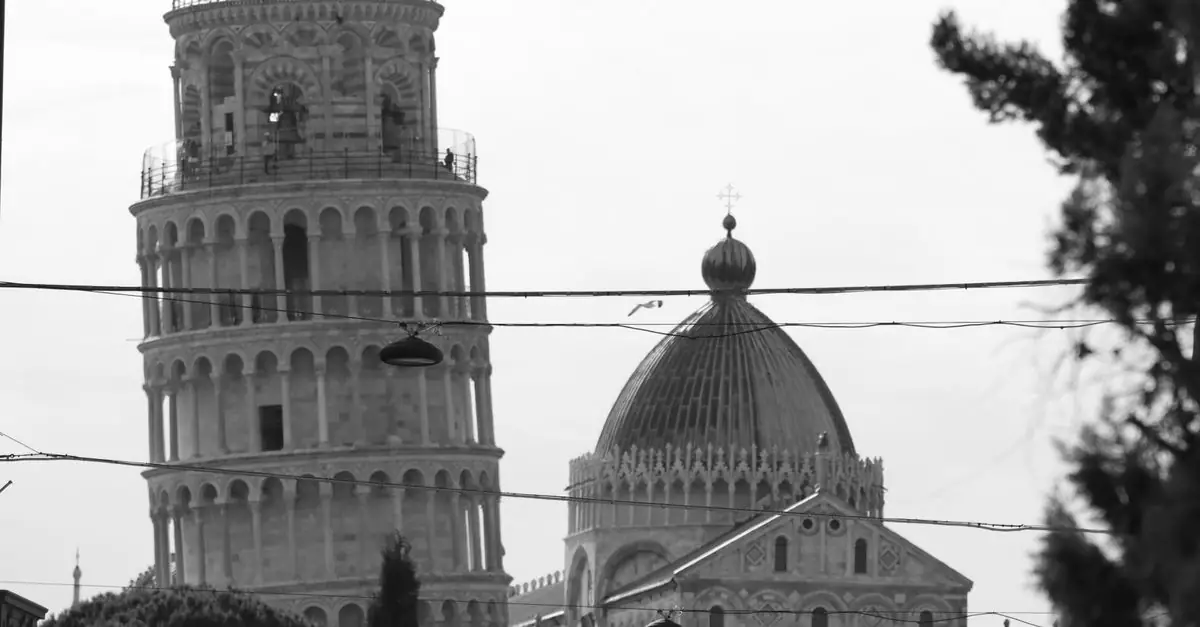
The Leaning Tower is the most celebrated element of the Piazza dei Miracoli (Square of Miracles), a UNESCO World Heritage site showcasing exceptional examples of Romanesque architecture. This expansive green space in Pisa is home to several magnificent structures, each contributing to the square’s breathtaking beauty.
The Pisa Cathedral (Duomo di Pisa), begun in 1064, stands as a masterpiece of Italian Romanesque style, featuring a striking façade of white and dark marble, intricate carvings, and impressive bronze doors. Adjacent to the cathedral is the Baptistery, the largest in Italy, renowned for its acoustics and a pulpit carved by Guido Bigarelli da Como. Completing the ensemble is the Camposanto Monumentale (Monumental Cemetery), a cloistered cemetery believed to contain sacred soil from the Holy Land, adorned with frescoes and sarcophagi. Together, these buildings create a harmonious architectural complex, offering a comprehensive glimpse into medieval Pisan artistry and ambition.
Best Photo Opportunities at the Leaning Tower of Pisa
Capturing the perfect photograph of the Leaning Tower of Pisa is a rite of passage for many visitors. The classic “holding up the tower” pose remains incredibly popular, with people positioning themselves to create the illusion of supporting the structure. For this shot, stand a good distance away from the tower, typically on the grass of the Piazza dei Miracoli, while your companion frames the picture carefully.
Another excellent perspective is from the sides of the Piazza dei Miracoli, looking back toward the tower with the Cathedral and Baptistery in the frame. This approach offers a more comprehensive view of the architectural ensemble and contextualizes the tower within its magnificent surroundings. Early morning or late afternoon light can provide softer, more dramatic illumination, reducing harsh shadows and enhancing the textures of the stone. Consider framing shots through the arches of the Camposanto or from the pathways leading into the piazza for unique angles. While many enjoy playful interactions, respecting the historical significance of the site is paramount.
Gazing Up at the Leaning Towers of Bologna
While Pisa’s tower is world-famous, Italy boasts other impressive examples of architectural ingenuity, particularly its leaning towers. Bologna, a vibrant city in the Emilia-Romagna region, is home to two iconic medieval structures that lean dramatically, offering a unique perspective on Italian history and engineering. These towers are not mere curiosities; they symbolize the city’s past power and prestige.
Discovering the Two Towers (Asinelli and Garisenda): Bologna’s Medieval Skyline
Bologna’s skyline is dominated by the Due Torri, or Two Towers: the Torre degli Asinelli and the Torre Garisenda. Built in the early 12th century, these were part of a larger network of defensive and residential towers that once dotted the city. Of the approximately 100 towers that stood at the height of Bologna’s medieval power, only about 20 remain, with Asinelli and Garisenda being the most prominent. The Torre degli Asinelli, standing at 97.2 meters, is the taller of the two and leans approximately 1.3 degrees. Its slightly shorter companion, the Torre Garisenda, at 48 meters, leans a more pronounced 3.9 degrees, making it appear more precarious. The Garisenda tower’s lean is so significant that it has been partially encased in steel to prevent its collapse.
Climbing the Asinelli Tower for Panoramic City Views
For visitors eager to experience Bologna from above, climbing the Torre degli Asinelli is essential. The ascent involves nearly 500 steps—a somewhat strenuous but rewarding journey. As you navigate the narrow, winding staircase, you can observe the medieval construction and feel the tower’s subtle sway. Reaching the top platform offers breathtaking 360-degree views of Bologna’s terracotta rooftops, winding streets, and surrounding countryside. On a clear day, you can see as far as the Apennine Mountains. It’s a fantastic vantage point to orient yourself within the city and appreciate its layout. Booking tickets in advance is highly recommended, especially during peak tourist seasons, as access is limited to small groups at scheduled times.
Architectural Significance and Historical Context of Bologna’s Leaning Towers
The leaning towers of Bologna are fascinating examples of medieval architecture and urban planning. Their construction, completed between 1109 and 1119, reflects the wealth and rivalry of Bologna’s noble families during the medieval period. Towers served as symbols of power, status, and defense. The dramatic lean of both towers results from a combination of factors, including unstable soil conditions and potentially rushed construction. The Garisenda tower, in particular, began to lean shortly after its construction, leading to its top being lowered in the 14th century to reduce stress. The engineering challenges and solutions employed throughout their history highlight Italy’s enduring architectural heritage. Understanding their context provides a deeper appreciation for these iconic structures beyond their tilted appearance.
Hidden Gems: Lesser-Known Leaning Structures in Italy
While Pisa’s famous tower draws crowds, Italy’s rich history has gifted it with other captivating, subtly tilted structures, each with its own story and architectural intrigue. These lesser-known leaning towers offer a more intimate encounter with Italian heritage, often with fewer tourists. Understanding the context behind their tilt, whether accidental or a deliberate design choice, adds a fascinating layer to any visit.
The Leaning Bell Tower of San Martino della Battaglia: A Tragic History
The Bell Tower of San Martino della Battaglia, located near Lake Garda, serves as a poignant reminder of historical conflict. This tower, built in the late 19th century, was intended as a monument to commemorate the Battle of San Martino during the Second Italian War of Independence. Its deviation from the vertical is not due to geological shifts like Pisa’s but rather a construction error that occurred during its building.
Architecturally, it’s a striking cylindrical structure, more slender and modern in appearance than many medieval campaniles. Inside, a spiral staircase leads to the top, offering panoramic views of the surrounding Lombardy countryside. The tower also houses an ossuary, a solemn testament to the soldiers who perished in the battle. Visiting San Martino della Battaglia provides a unique blend of historical reflection and architectural curiosity, contrasting with the more lighthearted atmosphere often associated with leaning structures. Access is typically straightforward, with modest entry fees.
Investigating the Bell Tower of San Giorgio dei Greci in Venice
Venice, a city built on water, faces its own architectural challenges, and its leaning tower, the Bell Tower of San Giorgio dei Greci, exemplifies this. This Greek Orthodox church’s campanile, dating back to the late 16th century, leans significantly to the north. Unlike Pisa’s gradual subsidence, the tilt here is attributed to the soft, marshy subsoil characteristic of Venetian construction.
The tower’s architecture features a distinctive octagonal drum topped by a dome, influenced by Byzantine traditions. While its lean is noticeable, it doesn’t possess the dramatic angle of its Tuscan counterpart. Visitors can admire its exterior from the Campo San Giorgio dei Greci. Though access to climb the tower is generally unavailable to the public, its presence adds to the intricate tapestry of Venice’s unique urban landscape and the engineering marvels that have endured for centuries. It’s a testament to how even a city famed for its flat horizons can harbor tilted marvels.
Exploring the Campanile di San Michele degli Scalzi in Livorno
Livorno, a port city in Tuscany, boasts its own leaning tower, the Campanile di San Michele degli Scalzi. This bell tower, part of a Carmelite monastery, began to tilt during its construction in the late 16th century due to unstable ground. Over time, seismic activity and soil consolidation issues have contributed to its pronounced angle.
The campanile is an elegant example of Renaissance architecture, characterized by its classical proportions and decorative elements. While it may not have the global fame of Pisa, its lean is substantial and visually striking, especially against the backdrop of the monastery church. Visitors can observe the tower from the street, and while climbing is not typically an option, its historical significance and unique architectural posture make it a worthwhile stop for those interested in Italy’s leaning structures beyond the most famous. It serves as a reminder that architectural anomalies are scattered across the Italian landscape, each with a compelling reason for its distinctive form.
What Architectural Styles Define Italy’s Leaning Towers?
Italy’s iconic leaning towers are more than just engineering marvels; they testify to centuries of evolving architectural styles and construction techniques. While Pisa’s tower is the most famous, understanding the broader architectural landscape reveals a fascinating tapestry of design and craftsmanship across different regions and eras.
Romanesque Influences on Pisa and Bologna’s Towers
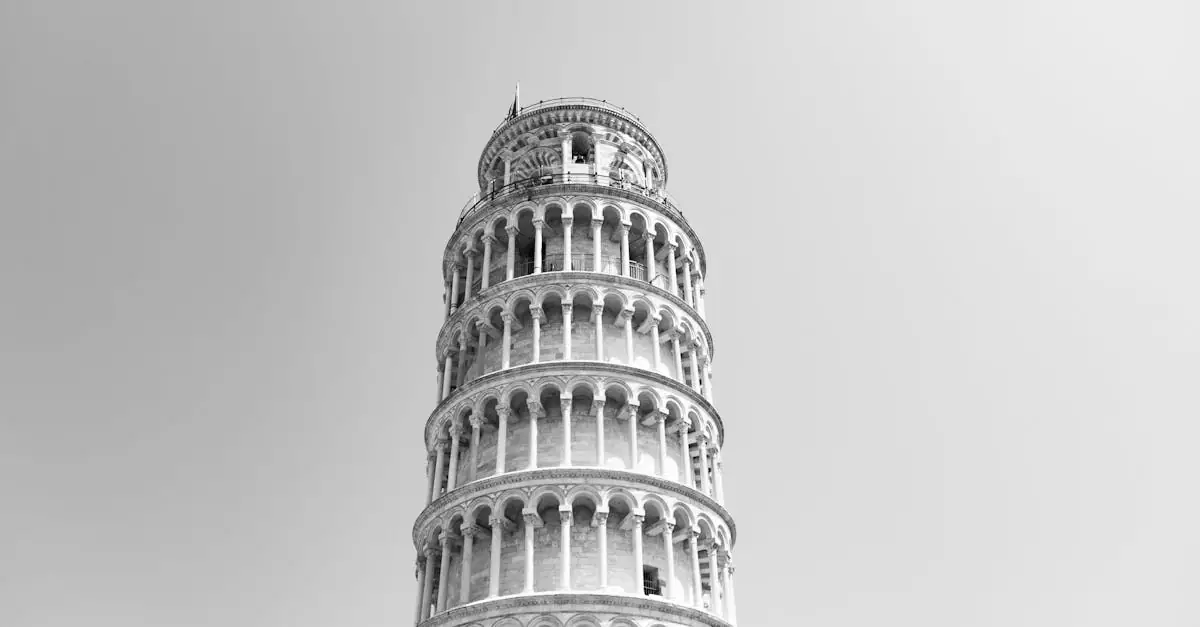
The foundational elements of many Italian leaning towers, including the celebrated Torre di Pisa, are deeply rooted in the Romanesque period. This style, prevalent from the 10th to the 12th centuries, is characterized by robust construction, rounded arches, and often massive stone blocks. Pisa’s tower, for instance, showcases these features with its cylindrical shape and arcaded galleries. The use of marble and stone, common in Romanesque architecture, lends a sense of permanence and grandeur.
In Bologna, the two famous leaning towers, the Asinelli and Garisenda, also bear strong Romanesque characteristics, though they were constructed slightly later, primarily in the 12th century. The Garisenda, which leans more dramatically, and its taller companion, the Asinelli, were built as defensive structures and symbols of noble families’ power. Their brick construction and sturdy, unadorned lower sections reflect the practical and imposing aesthetics of the era. Examining these towers provides insight into the early engineering capabilities and architectural priorities of medieval Italian city-states.
Gothic and Renaissance Additions to Italian Campaniles
As architectural styles progressed, later periods brought distinct modifications and new constructions. While many original leaning structures date back to the Romanesque era, subsequent additions or entirely new campaniles (bell towers) often incorporated Gothic and Renaissance elements. Gothic architecture, with its pointed arches, ribbed vaults, and ornate tracery, introduced a sense of verticality and delicate detail. Renaissance designs, emphasizing symmetry, proportion, and classical motifs, further refined these structures.
For example, while not as dramatically leaning as Pisa or Bologna, many campaniles throughout Italy, especially in regions like Tuscany and Umbria, feature Gothic or Renaissance detailing added over centuries. These might include more elaborate window designs, sculpted ornamentation, or changes to the belfry. The evolution of these bell towers reflects the broader shifts in Italian artistic and architectural sensibilities, moving from the solid foundations of the Romanesque to the more refined and decorative styles that followed. Understanding these layers of design helps appreciate the long and complex history of Italian ecclesiastical and civic architecture.
Engineering Challenges and Solutions for Stabilizing Leaning Structures
The very reason these towers lean is a testament to significant engineering challenges encountered during their construction and throughout history. The primary cause of the lean in most Italian towers is the unstable subsoil, often consisting of soft clay, sand, and shells. Pisa’s tower began to lean almost immediately after construction started in 1173 due to inadequate foundations built on this compressible ground. Builders attempted to compensate by making the upper floors taller on the leaning side, inadvertently exacerbating the tilt.
Stabilizing these iconic structures has required ingenious engineering solutions over the centuries. For the Torre di Pisa, extensive stabilization efforts in the late 20th and early 21st centuries involved carefully removing soil from beneath the higher side, allowing the tower to settle slightly and reduce its lean to a safer angle. This delicate process, akin to controlled subsidence, aimed to preserve the tower’s historic appearance while ensuring its long-term stability. Other leaning towers have faced similar issues, with varying degrees of intervention required. These engineering feats not only save these historical monuments but also offer valuable lessons in foundation engineering and historical preservation for structures worldwide.
Planning Your Visit to Italy’s Leaning Towers
While Pisa’s iconic tower draws crowds, Italy boasts several other leaning architectural marvels, each with its own charm and history. Planning a trip to see these unique structures requires considering timing, travel logistics, and accommodation to make the most of your Italian adventure beyond the most famous landmark.
Best times to visit Pisa, Bologna, and other tower locations
The shoulder seasons, spring (April to June) and autumn (September to October), offer pleasant weather and fewer crowds at most Italian destinations. During these months, temperatures are mild, ideal for walking and sightseeing. Summer (July and August) can be very hot and crowded, especially in popular tourist hubs like Pisa. Winter (November to March) brings cooler temperatures and a chance of rain but also the fewest visitors, offering a more serene experience.
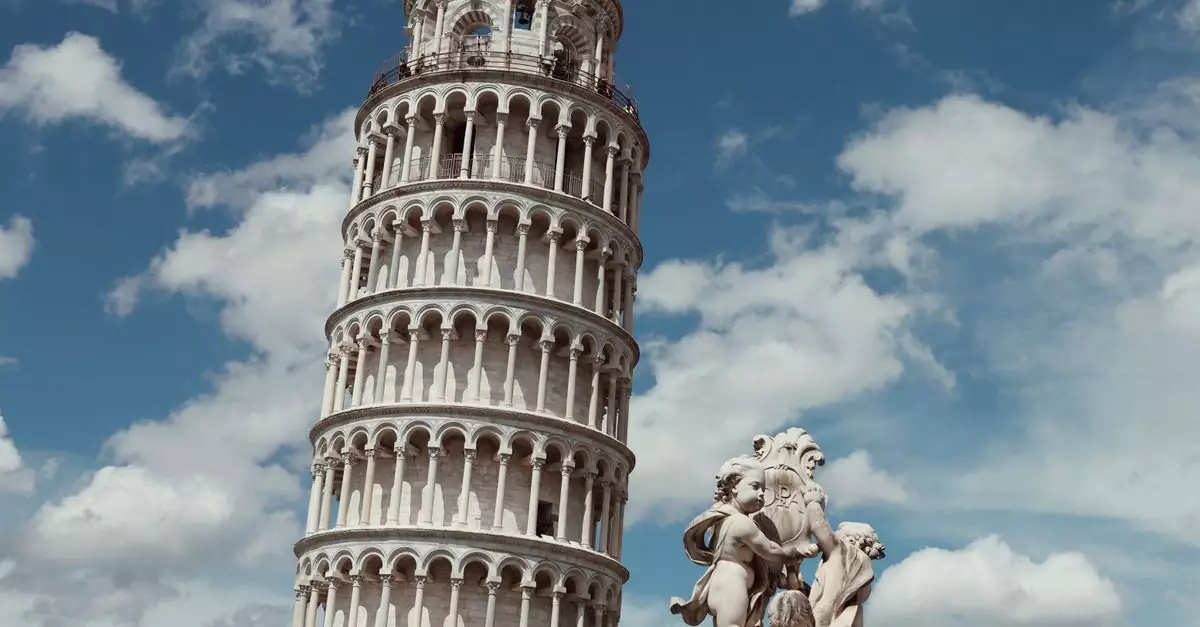
Consider the specific location when planning your visit. Pisa is a year-round destination, but seeing the tower under a clear blue sky or illuminated at night is particularly appealing. Bologna’s Asinelli Tower is best enjoyed on a crisp autumn day when the views from the top are unobstructed.
Navigating between Italy’s leaning towers: Train and driving routes
Italy’s efficient rail network makes traveling between cities a convenient option. High-speed trains connect major hubs, allowing you to easily hop from Pisa to cities like Bologna or even further afield to explore other regional leaning structures. Regional trains are a more budget-friendly choice for shorter distances.
Renting a car offers greater flexibility, particularly if you plan to visit smaller towns or less accessible leaning towers. However, driving in Italian cities can be challenging due to narrow streets, ZTL (limited traffic zones), and parking difficulties. Factor in the cost of fuel, tolls, and parking when considering a rental.
Here’s a general overview of common routes:
| Origin | Destination | Primary Transport | Estimated Travel Time | Notes |
|---|---|---|---|---|
| Pisa | Bologna | Train | ~2.5 – 3.5 hours | Requires a change, usually in Florence. |
| Florence | Pisa | Train | ~1 hour | Frequent direct services. |
| Bologna | Modena | Train | ~20 – 30 minutes | Frequent regional and high-speed options. |
| Rome | Pisa | Train | ~3 – 4 hours | High-speed options available. |
| Milan | Bologna | Train | ~1 hour | Frequent high-speed services. |
Accommodation options near iconic leaning towers
Accommodations vary widely, from luxurious hotels to charming bed and breakfasts and budget-friendly hostels. In Pisa, staying near the Piazza dei Miracoli offers easy access to the tower but can be more expensive. Consider the historic center for a balance of convenience and atmosphere.
Bologna offers a wide range of options. Staying near the Piazza Maggiore provides a central base for exploring the city and its towers. For a more local feel, look for accommodations in neighborhoods like Saragozza or Santo Stefano. Many Italian cities also have serviced apartments, which can be a good option for longer stays or families.
Budgeting for tower visits and surrounding attractions
The cost of visiting Italy’s leaning towers varies. Climbing Bologna’s Asinelli Tower typically involves a fee, while other structures might be viewed from the exterior. Pisa’s Leaning Tower also requires a ticket for entry, and booking in advance is highly recommended.
Beyond the tower entrance fees, budget for transportation between cities, local transport within towns, meals, and other attractions. Dining in tourist hotspots can be pricier than venturing a few blocks away into local trattorias. Consider purchasing city passes if you plan to visit multiple museums and attractions. The cost of accommodation will also significantly impact your overall budget. Traveling during the off-season can lead to substantial savings on both flights and lodging.
Frequently Asked Questions About Italy’s Leaning Towers
Are there other leaning towers in Italy besides Pisa?
Yes, Italy boasts several other notable structures with a distinct tilt, offering a fascinating glimpse into architectural challenges and historical quirks. While the Tower of Pisa is the most famous, towns like Bologna and Venice have their own impressive, albeit less universally known, leaning towers. These structures showcase a range of construction styles and historical contexts, proving that Italy’s architectural marvels extend far beyond its most iconic tilted landmark.
Can you climb all of Italy’s leaning towers?
Access to climb Italy’s leaning towers varies significantly. The iconic Tower of Pisa is open to visitors, requiring advance booking for timed entry to ascend its 296 steps. In contrast, Bologna’s two famous leaning towers, the Asinelli and Garisenda, have different accessibility. The Asinelli tower is often open for climbs, offering panoramic city views, but its steep, narrow staircase can be challenging. The Garisenda tower, however, is closed to the public due to its pronounced tilt and safety concerns. Venice’s St. Mark’s Campanile, while not a traditional tower with a staircase, has a lift providing access to its summit. Always check the official websites for the most current opening times, access restrictions, and booking information before planning your visit.
What is the typical cost of visiting a leaning tower?
The cost to visit Italy’s leaning towers generally ranges from €15 to €30 per person, depending on the specific tower and whether you book tickets in advance. The Tower of Pisa’s entry fee is typically around €18-€20. Climbing Bologna’s Asinelli tower might cost around €5-€10, often booked directly at the site or online. These prices reflect the maintenance and preservation efforts required for these historic structures. It’s advisable to book tickets online well in advance, especially for the Tower of Pisa, as slots can fill up quickly. Some smaller, less famous leaning structures might be viewable from the outside for free.
What are the best local foods to try near these landmarks?
Exploring the culinary landscape around Italy’s leaning towers offers a delicious journey through regional specialties. Near Pisa, look for cecina, a thin, unleavened chickpea flour pancake, and pappa al pomodoro, a hearty tomato and bread soup. In Bologna, often called Italy’s gastronomic capital, you must try tagliatelle al ragù (the authentic Bolognese sauce), tortellini in brodo (stuffed pasta in broth), and mortadella. When visiting Venice’s leaning bell tower, sample cicchetti, small snacks similar to tapas, often enjoyed with a glass of local wine, and sarde in saor, sweet and sour sardines.