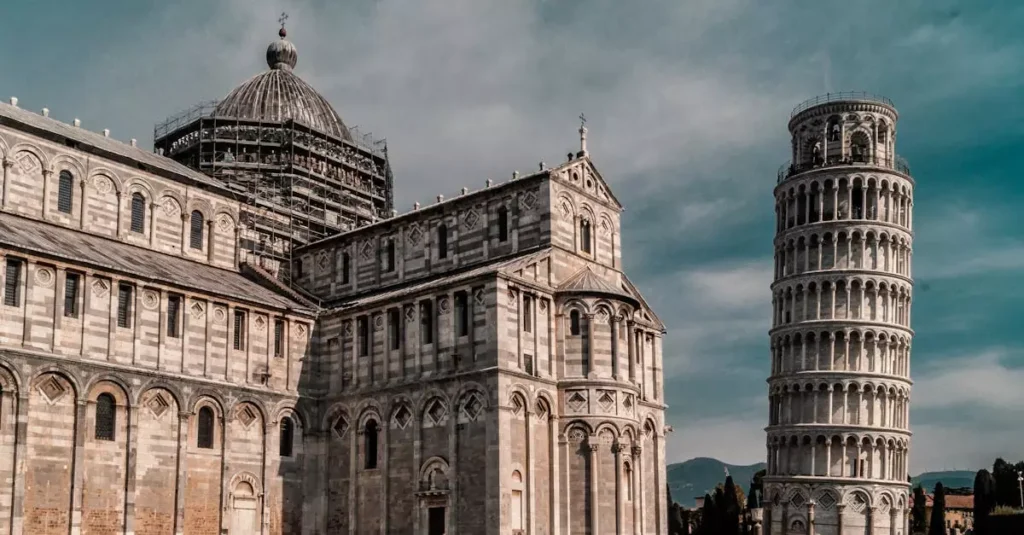
Italy’s leaning towers are more than mere architectural curiosities; they are enduring testaments to centuries of engineering, history, and the unpredictable forces of nature. While the Leaning Tower of Pisa is the most famous, its iconic tilt is not unique. Exploring the leaning towers Italy history reveals a captivating narrative of medieval ambition, geological challenges, and ingenious solutions. This article uncovers the stories behind these gravity-defying structures, examining why they lean, the efforts to preserve them, and what makes them compelling landmarks. Prepare to discover the engineering marvels and historical contexts that have allowed these towers to stand, leaning but resilient, for generations.
Unraveling the History of Italy’s Leaning Towers

The phenomenon of leaning towers in Italy represents a fascinating blend of history, engineering ambition, and the forces of nature. While Pisa’s iconic tower is the most recognized, its tilt is part of a broader pattern. Understanding the origins and evolution of these inclined structures offers insight into medieval construction and modern preservation.
The Original Leaning Tower: Pisa’s Accidental Marvel
The Leaning Tower of Pisa is perhaps the most well-known of Italy’s leaning towers. Construction began in 1173, intended as the freestanding bell tower for the city’s cathedral. However, shortly after the completion of the third story in 1178, the soft, unstable subsoil began to yield. The ground, composed of clay, sand, and shells, was inadequate to support the immense weight of the marble structure.
This premature settlement initiated the tower’s characteristic tilt. Construction halted for nearly a century due to ongoing wars, inadvertently allowing the soil to compact and settle further, which prevented a complete collapse. When work resumed in 1272 under Giovanni di Simone, builders attempted to counteract the lean by making the new stories taller on one side. Unfortunately, this adjustment only added more weight and worsened the problem. A second pause in construction and a final phase to add the bell chamber further complicated the tower’s lean. The tilt stabilized around 5.5 degrees before restoration efforts in the late 20th and early 21st centuries reduced it to approximately 3.97 degrees.
Beyond Pisa: Discovering Other Inclined Towers in Italy
While Pisa boasts the most globally recognized leaning tower, Italy is home to several other notable examples. These lesser-known towers often share similar geological challenges or architectural peculiarities. The Leaning Tower of Genoa (Torre Pendente di Genova), for example, leans due to foundation settlement in marshy terrain. Although less dramatic than Pisa’s, its incline is a testament to the widespread issues faced by builders in historical Italian cities.
Another significant example is the Garisenda Tower in Bologna, part of the city’s famous “Two Towers” complex. Built in the 12th century, the Garisenda leans significantly due to subsidence and has been a subject of concern for centuries. Unlike Pisa’s tower, which continued construction despite its lean, the Garisenda’s height was reduced in the 14th century to mitigate collapse risk. These other leaning structures illustrate that Pisa’s situation, while famous, was not entirely unique in the context of medieval Italian engineering.
Architectural Evolution and Stabilization Efforts
The history of Italy’s leaning towers also reflects evolving engineering and conservation practices. Early builders, confronted with unexpected tilting, often resorted to rudimentary methods to correct the lean, such as building higher on one side or reinforcing the base. These attempts were not always successful and sometimes worsened the situation, as seen with the early stages of Pisa’s construction. The inherent instability of the soil was a primary culprit, but architectural choices also contributed.
In recent times, the focus has shifted from accommodating the lean to actively stabilizing these historic landmarks. The extensive stabilization project for the Leaning Tower of Pisa, conducted between 1990 and 2001, involved carefully removing soil from the higher side of the foundation. This complex engineering feat successfully reduced the tilt and secured the tower for future generations, ensuring that this accidental marvel can continue to stand. Such efforts demonstrate a modern understanding of soil mechanics and structural engineering applied to preserve these invaluable pieces of history.
Why Do Italy’s Towers Lean? Engineering and Geology Explained
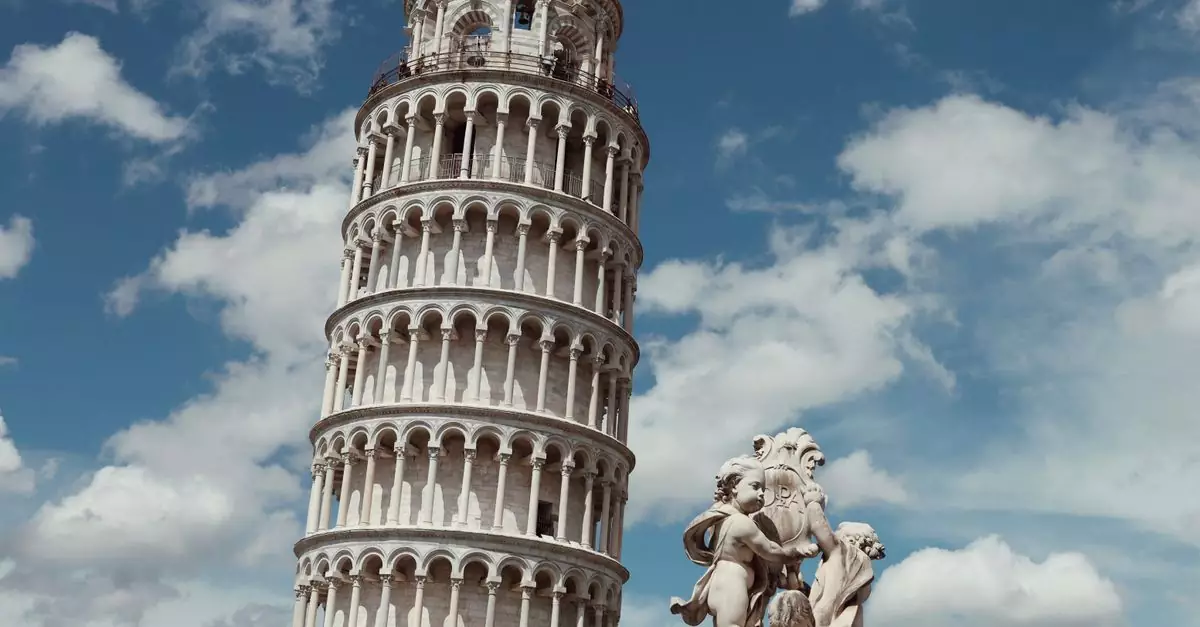
The iconic leaning towers of Italy, most notably the Leaning Tower of Pisa, testify to both architectural ambition and geological quirks. Their distinctive tilt is not a deliberate design choice but a consequence of the very ground they were built upon. Understanding the reasons behind this phenomenon provides insight into the interplay between human construction and natural forces.
The Soft Foundations: Subsoil Composition Beneath the Towers
The primary cause of the lean is the soft, unstable subsoil characteristic of many Italian cities, particularly those in Tuscany. The ground beneath these structures is a complex mix of clay, sand, and shells, deposited over millennia by ancient rivers and the sea. This unstable foundation, especially the thick layers of soft clay, cannot adequately support the immense weight of heavy stone towers.
When construction began, builders often overlooked the compressible nature of the subsoil. As each level was added, the accumulating weight caused the ground beneath to compress unevenly. This gradual sinking, or subsidence, initiated the tilt. In Pisa, the tower began to lean during its construction in the 12th century, prompting builders to adjust the height of subsequent floors on the rising side to compensate, although this ultimately proved insufficient.
The Role of Water Table and Drainage in Instability
Beyond soil composition, the fluctuating water table significantly impacts the stability of these structures. Many Italian cities are situated near rivers or the coast, leading to groundwater levels that can change drastically with seasons and rainfall. When the water table rises, it can saturate the already soft soil, further reducing its bearing capacity and exacerbating subsidence.
Conversely, changes in urban water management and drainage systems can also affect these ancient foundations. Alterations to nearby water sources or the construction of underground infrastructure can shift the moisture content of the soil, leading to unexpected changes. For example, historical drainage practices in Pisa may have inadvertently contributed to the conditions that allowed the tower to lean. The constant presence of water, combined with compressible earth, creates a challenging environment for any tall, heavy building.
Innovative Solutions: How Engineers Stabilized Pisa’s Tower
For centuries, the Leaning Tower of Pisa remained precarious, with fears of collapse growing. However, a comprehensive stabilization project undertaken between 1990 and 2001 significantly reduced its tilt and secured its future. This remarkable engineering feat involved carefully removing soil from the side opposite the lean.
By extracting small amounts of soil from beneath the higher side, engineers allowed that side to settle slightly, counteracting the existing lean. This method, known as soil extraction or undercutting, was implemented with extreme precision. The goal was not to straighten the tower completely, which would have been aesthetically undesirable and potentially dangerous, but to reduce its angle to a safer level. This stabilization effort has greatly improved the tower’s stability, ensuring its survival for generations to come, allowing visitors to marvel at its unique angle without immediate concern for its structural integrity.
Exploring the Leaning Tower of Pisa: Visitor Guide
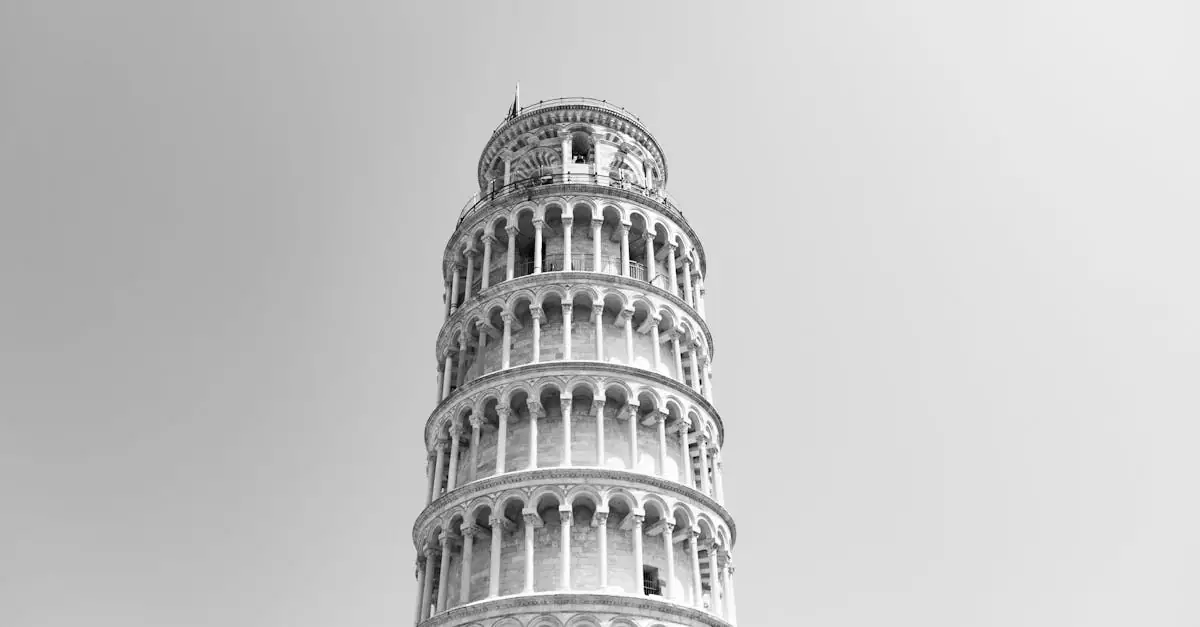
The Leaning Tower of Pisa, perhaps the most famous of Italy’s tilting structures, attracts millions of visitors annually. While its iconic tilt is the main attraction, the surrounding area offers much more than just a photo opportunity. Efficient planning ensures you make the most of your time at this historic site.
Getting to Pisa: Train, Car, and Airport Access
Pisa is well-connected, making it an accessible destination within Northern Italy. The most convenient way to reach Pisa is often by train. Pisa Centrale is the main railway station, with frequent connections from major cities like Florence, Rome, and Milan. From the station, it’s a pleasant 20-minute walk to the Piazza dei Miracoli, or you can take a local bus.
Driving to Pisa is also an option, but parking near the historic center can be challenging and expensive. Several paid parking lots are available just outside the ZTL (Limited Traffic Zone). The nearest airport is Pisa International Airport (PSA), also known as Galileo Galilei Airport, which has direct flights from many European cities. From the airport, a short taxi ride or the PisaMover shuttle will take you to the city center or the train station.
| Transportation Option | Pros | Cons |
|---|---|---|
| Train | Frequent, convenient from major cities | Requires onward travel from Pisa Centrale |
| Car | Flexibility for day trips | Parking difficulties, ZTL restrictions |
| Airport Shuttle/Taxi | Direct access from flights | Can be more expensive than public transit |
Tickets and Timed Entry for Tower Ascent
Climbing the Leaning Tower of Pisa is a popular activity, and booking tickets in advance is highly recommended, especially during peak season. Tickets are sold for specific time slots, ensuring a controlled flow of visitors to the tower. Children under eight years old are not permitted to climb the tower for safety reasons. The climb involves 296 steps, and while manageable for most, the unevenness due to the lean adds a unique challenge.
Allow at least 30 minutes for the ascent and time at the top. You’ll need to store any bags, backpacks, or large purses in the complimentary cloakroom located near the tower before entering. This is a mandatory step to preserve the integrity of the monument.
What to See and Do Around the Piazza dei Miracoli
The Leaning Tower is the centerpiece of the Piazza dei Miracoli (Square of Miracles), a UNESCO World Heritage site. This stunning ensemble includes the Pisa Cathedral (Duomo), the Baptistery, and the Camposanto Monumentale (Monumental Cemetery). Each structure is a masterpiece of Romanesque architecture and offers its own historical and artistic significance.
The Pisa Cathedral, with its striking façade and ornate interior, is worth exploring. The Baptistery, the largest in Italy, is known for its impressive acoustics. The Camposanto, a cloistered cemetery, houses ancient Roman sarcophagi and beautiful frescoes. Consider purchasing a combined ticket that grants access to all these monuments for a comprehensive experience of this historic piazza.
Photography Tips for Capturing the Iconic Lean
The Leaning Tower of Pisa is a photographer’s dream, but capturing its unique tilt requires a bit of creativity. The classic “holding up the tower” pose is a must-do for many visitors, so be prepared for crowds around the base. To get the best shot, try different angles; standing further back can emphasize the lean more dramatically.
Experiment with wide-angle lenses to fit the entire tower and surrounding piazza into your frame. Early morning or late afternoon light often provides softer, more flattering illumination and fewer crowds. Don’t forget to capture the details of the tower’s architecture and the surrounding monuments for a well-rounded photographic record of your visit.
Beyond Pisa: Lesser-Known Leaning Towers Worth Visiting
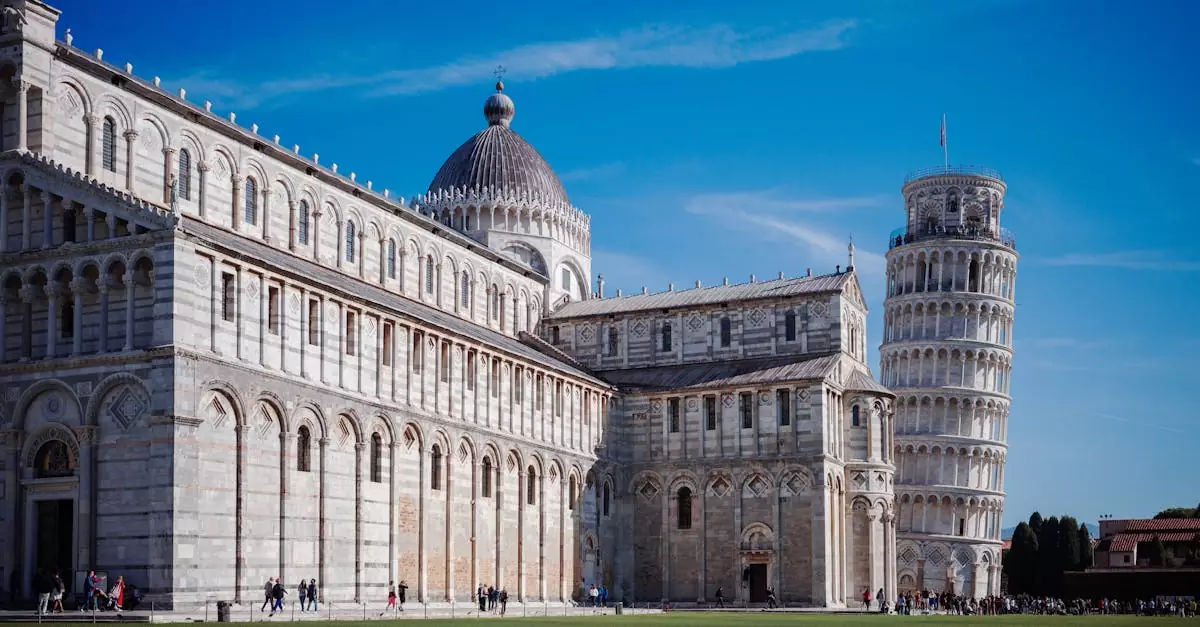
While the Leaning Tower of Pisa rightfully claims global fame, Italy’s fascination with gravity-defying architecture extends far beyond Tuscany. Several other towers across the country exhibit intriguing leans, offering unique historical insights and engineering marvels. These lesser-known structures provide a more intimate travel experience, often with fewer crowds and a deeper connection to local history.
The Bell Tower of San Martino in Bolzano
In the heart of South Tyrol, the Bell Tower of San Martino (Campanile di San Martino) in Bolzano presents a distinct lean, often described as more pronounced than Pisa’s. This 14th-century Gothic tower, part of the Church of San Martino, owes its tilt to the soft, marshy ground it was built upon. Unlike Pisa’s gradual settlement, San Martino’s lean developed more rapidly, creating a dramatic visual effect.
Visiting this tower offers a chance to experience a different facet of Italian history, set against the backdrop of the Dolomites. The town of Bolzano itself is a charming blend of Italian and Austrian culture, featuring a picturesque old town and excellent local cuisine. Access to the tower’s base is straightforward, though climbing is generally not permitted for visitors.
Traveler Tip: Consider visiting during the Bolzano Christmas Market for a festive atmosphere, or in late spring when the surrounding alpine scenery is at its most vibrant.
The Leaning Tower of Gemona del Friuli
Northeastern Italy’s Friuli-Venezia Giulia region is home to another noteworthy leaning structure: the bell tower of the Duomo di Gemona del Friuli. This tower, built in the late 13th century, developed a noticeable inclination due to seismic activity and the underlying soil composition. Gemona has a history of earthquakes, and the tower’s lean is a testament to its resilience.
The tower stands proudly next to the Duomo, which itself has undergone several rebuilds due to natural disasters. The lean is subtle but distinct, and the surrounding piazza offers a peaceful spot to admire its architectural peculiarity. Gemona del Friuli is a town with a strong historical character, recovering and rebuilding with remarkable spirit after devastating earthquakes.
Logistics: Gemona del Friuli is accessible by train from Udine or Trieste. Exploring the town and its tower is best done on foot, allowing you to appreciate the local atmosphere and rebuilt architecture.
Torre Asinelli in Bologna: A Different Kind of Lean
While not a “leaning tower” in the same vein as Pisa or San Martino, Bologna’s Torre Asinelli deserves mention for its extreme height and subtle, intentional lean that has developed over centuries. Constructed in the early 12th century as part of a defensive fortification, the Torre Asinelli is one of the city’s iconic “Two Towers” (Le Due Torri). It stands at an impressive 97.2 meters, making it the taller of the two.
The tower’s lean, approximately 1.3 degrees, is not due to a foundational flaw but rather a gradual shift over time, exacerbated by its immense weight and the construction techniques of the era. Unlike structures that lean due to instability, the Torre Asinelli is remarkably stable, showcasing medieval engineering. Visitors can climb the 498 steps to the top for breathtaking panoramic views of Bologna, a city renowned for its porticoes and culinary heritage.
Comparison:
| Feature | Leaning Tower of Pisa | Bell Tower of San Martino | Leaning Tower of Gemona | Torre Asinelli (Bologna) |
|---|---|---|---|---|
| Lean | Significant | Pronounced | Noticeable | Subtle |
| Height | 55.86 m | Approx. 60 m | Approx. 50 m | 97.2 m |
| Construction | 12th Century | 14th Century | Late 13th Century | Early 12th Century |
| Access | Climbable | Base viewing | Base viewing | Climbable |
| Setting | Urban, tourist hub | Alpine town | Historic town | Urban, historic center |
While Pisa draws the largest crowds, seeking out these other leaning towers in Italy offers a more nuanced appreciation for the country’s architectural diversity and engineering history. Each structure tells a unique story, shaped by its environment and the hands that built it.
Planning Your Visit to Italy’s Inclined Architectural Wonders

Italy boasts more than just the famous Leaning Tower of Pisa; several other charming bell towers across the country share a similar, albeit less pronounced, tilt. Planning a trip to see these unique structures requires understanding the best times to visit, how to travel between them, where to stay, and what to expect budget-wise. This section provides practical advice for crafting an itinerary around these inclined marvels.
Best Time of Year to Visit the Leaning Towers
The ideal time to visit Italy’s leaning towers, including the iconic one in Pisa, is during the shoulder seasons: spring (April to May) and autumn (September to October). During these months, the weather is generally pleasant, with mild temperatures perfect for sightseeing and fewer crowds than in the peak summer months of July and August. Spring offers blooming landscapes, while autumn provides beautiful foliage and harvest festivals.
Winter (November to March) sees the fewest tourists, which can be appealing if you prefer a more solitary experience. However, some attractions might have reduced hours, and the weather can be chilly and damp, especially in the northern regions. Summer offers the warmest weather and longest daylight hours, but it coincides with the highest tourist numbers, leading to longer queues and higher prices.
Here’s a quick look at seasonal considerations:
| Season | Weather | Crowds | Prices | Notes |
|---|---|---|---|---|
| Spring | Mild, pleasant | Moderate | Moderate | Blooming flowers, comfortable for walking |
| Summer | Hot, sunny | High | High | Longest days, busiest time |
| Autumn | Mild, crisp | Moderate | Moderate | Harvest season, beautiful foliage |
| Winter | Cool to cold | Low | Low | Reduced hours for some attractions |
Navigating Italy: Transportation Between Tower Locations
Traveling between Italy’s leaning towers involves a mix of train travel, local buses, and sometimes driving. The most famous, the Leaning Tower of Pisa, is easily accessible by train to Pisa Centrale station, followed by a short bus ride or a pleasant walk to the Piazza dei Miracoli.
For those looking to visit other inclined structures, like the bell towers in Bologna or Venice, Italy’s efficient rail network is your best bet. High-speed trains connect major cities like Rome, Florence, and Venice, making multi-city trips feasible. Regional trains are excellent for reaching smaller towns where other leaning towers might be found.
Consider purchasing a rail pass if you plan on extensive train travel across Europe. Booking train tickets in advance, especially for high-speed routes, can often secure better prices. Renting a car offers flexibility for reaching more remote locations or exploring the countryside, but be aware of ZTL (Limited Traffic Zones) in historic city centers and the challenges of parking.
Accommodation Options Near Pisa and Other Towers
When planning your stay, accommodation options vary significantly depending on the location. In Pisa, you’ll find a range of choices from budget-friendly hostels and guesthouses to mid-range hotels and luxurious apartments, many located within walking distance of the Leaning Tower. Staying near the Piazza dei Miracoli offers convenience, while accommodations further from the main tourist hub might provide a more local feel and better value.
For other leaning tower destinations, such as Bologna, expect a similar spectrum of hotels and B&Bs, often concentrated in the historic centers. Venice offers unique canal-side accommodations, but prices can be considerably higher. Booking accommodation well in advance is highly recommended, especially during peak travel seasons, to secure the best locations and rates.
Budgeting for Your Leaning Tower Adventure
Your budget for a trip focused on Italy’s leaning towers will depend on your travel style, the number of destinations you plan to visit, and the duration of your stay. Entrance fees for the Leaning Tower of Pisa can be a significant portion of the budget if you plan to climb it (advance booking is essential). Many other bell towers are visible from the outside and do not require a ticket for viewing.
Transportation costs will vary: train tickets can range from €20-€100+ depending on the distance and speed. Accommodation can be found from €50 per night for a budget hotel to €200+ for a mid-range option in popular cities. Food costs are also variable; eating at local trattorias and pizzerias is generally more affordable than dining in tourist-heavy areas.
A rough daily budget for a mid-range traveler, excluding flights to Italy, might look like this:
- Accommodation: €80 – €150
- Food: €40 – €70
- Local Transport/Activities: €30 – €60
- Inter-city Transport (averaged daily): €20 – €50
This brings a potential daily spend between €170 and €330 per person. Adjustments can be made by opting for hostels, self-catering, and focusing on free external viewing of towers to reduce costs.
Frequently Asked Questions About Italy’s Leaning Towers
Can you still climb the Leaning Tower of Pisa?
Yes, visitors can still ascend the iconic Leaning Tower of Pisa. After extensive restoration efforts to stabilize its tilt, the tower reopened to the public. Advance booking is highly recommended, especially during peak tourist seasons, as access is limited in timed groups to manage visitor numbers and preserve the structure. The climb involves over 290 steps and offers unique perspectives of the Piazza dei Miracoli.
What is the oldest leaning tower in Italy?
While the Leaning Tower of Pisa is the most famous, the oldest known leaning tower in Italy is the bell tower of the Basilica of San Zeno in Verona. Construction on this tower began in the 11th century, and it developed a noticeable tilt over time due to the unstable subsoil. Many historic bell towers, or campanili, across Italy have experienced varying degrees of lean due to construction techniques and geological conditions prevalent in the region.
Are there other leaning towers in the world besides those in Italy?
Italy is home to many of the world’s most recognizable leaning towers, but they are not exclusive to the country. Notable examples globally include the Leaning Tower of Suurhusen in Germany, which has a more pronounced tilt than Pisa, and the Leaning Tower of Teluk Intan in Malaysia, often called the “Leaning Tower of Perak.” These structures, like their Italian counterparts, often developed their tilt due to foundation issues or soil settlement.
What are the main causes of the leaning in Italian towers?
The primary cause of the leaning in Italian towers is the soft, unstable subsoil beneath their foundations. Many of these structures, particularly those built centuries ago, were constructed on marshy or clay-rich ground that could not adequately support their immense weight. Differential settlement, where one side of the foundation sinks more than the other, is the direct result, leading to the characteristic tilt. The Leaning Tower of Pisa, for instance, is built on a foundation of clay, sand, and shells, which proved insufficient.