Greece’s coastline is a treasure trove of stunning shores, each offering a unique slice of paradise. From world-renowned stretches of sand to hidden coves accessible only by boat, discovering the best beaches in Greece means exploring a diverse and breathtaking landscape. This guide will help you navigate the options, whether you’re dreaming of pink sands, dramatic cliffs, or tranquil turquoise waters.
You’ll learn about five of the most spectacular beaches, each with its own distinct charm and appeal. We’ll cover what makes them special, how to get there, and who they’re best suited for. Prepare to be inspired as we delve into the unforgettable coastal experiences that await you across the Hellenic Republic.
Top 5 Best Beaches in Greece for Every Traveler
Greece boasts an astonishing coastline, offering a diverse range of beach experiences. From the iconic shores of the Ionian Islands to the unique volcanic landscapes of the Cyclades, finding the best beaches means catering to different preferences. Whether you seek soft sands, dramatic scenery, or tranquil waters, these top five destinations provide unforgettable coastal escapes.
Elafonissi Beach, Crete: Pink Sands and Crystal Waters
Elafonissi Beach on the southwestern coast of Crete is famous for its unique pink sand, created from crushed seashells. The shallow, crystal-clear turquoise waters form a natural lagoon, warm and inviting, making it a safe haven for families. As a protected nature reserve, visitors are encouraged to respect its delicate ecosystem.
Reaching Elafonissi requires a drive from Chania or Rethymno, often via bus tours or rental cars. The journey itself showcases scenic views of the Cretan countryside. During peak season, it can get crowded, so arriving early is advisable. For a more secluded experience, a short walk across the shallow water leads to a small island with even quieter coves.
- Best for: Families, photographers, those seeking unique natural beauty.
- Getting there: Car rental or organized bus tours from major towns in Crete.
- When to visit: Late spring to early autumn for the warmest weather and calmest seas.
Navagio Beach (Shipwreck Beach), Zakynthos: Iconic Views and Turquoise Seas
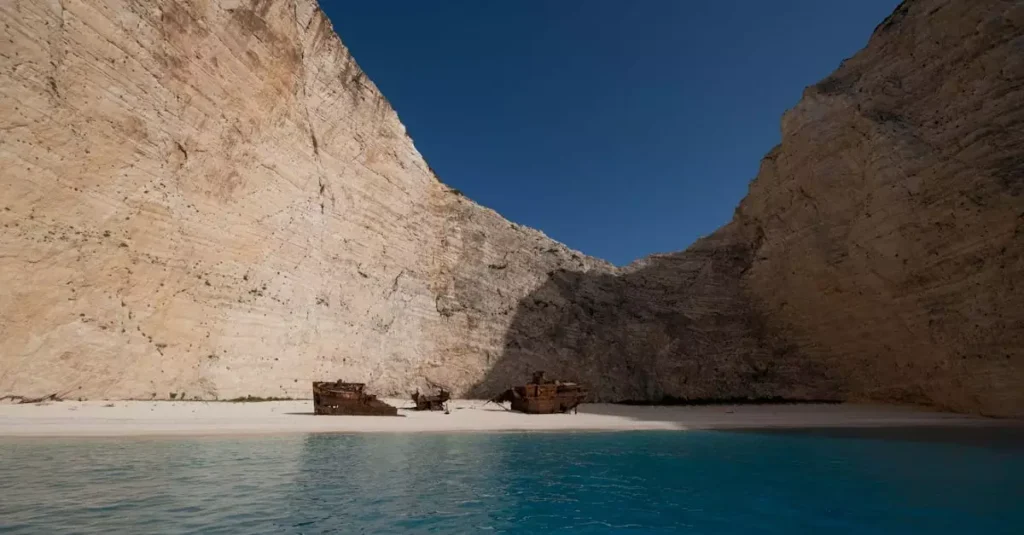
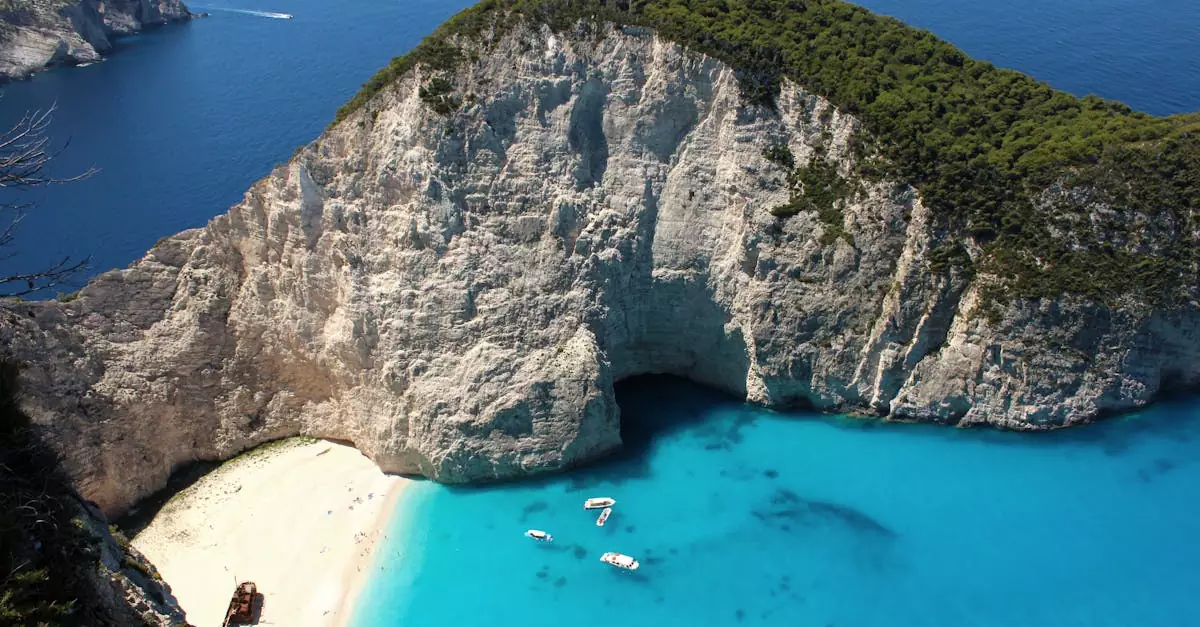
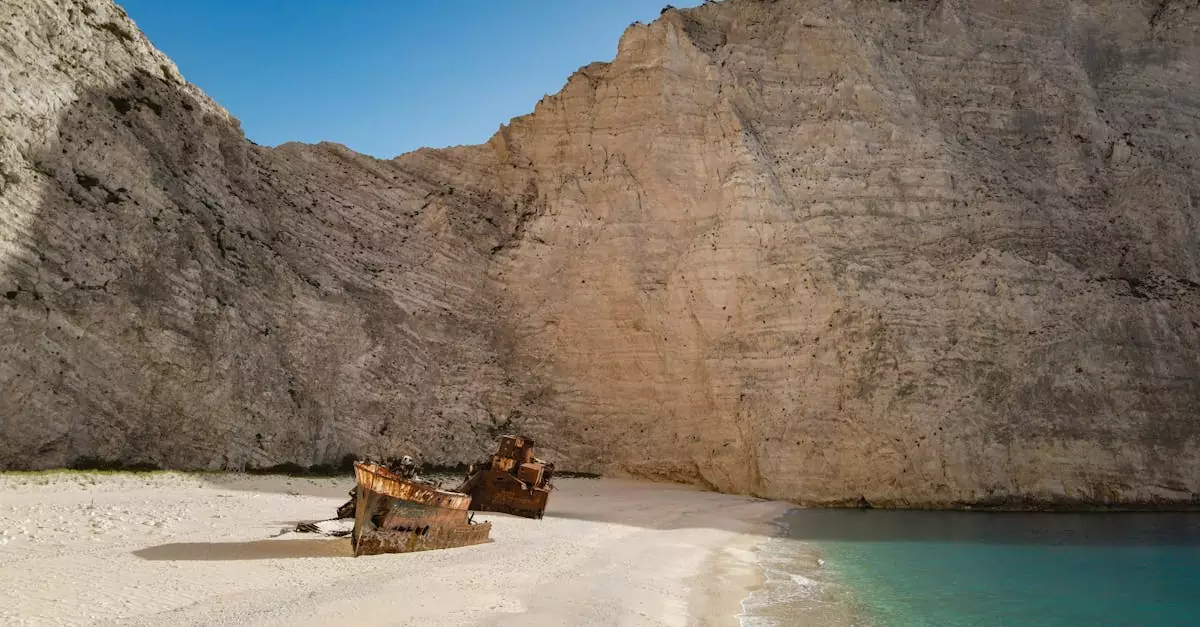
Navagio Beach, also known as Shipwreck Beach, is one of the most photographed spots in Greece. Located on the northern coast of Zakynthos, this cove is renowned for its striking white pebble shore, towering limestone cliffs, and intensely turquoise waters. The rusting wreck of the MV Panagiotis, which ran aground in the 1980s, adds a dramatic focal point.
Access to Navagio Beach is primarily by boat tour from various ports on Zakynthos, such as Agios Nikolaos or Zante Town. While swimming is permitted, the beach can be busy with tour boats. For the best photographic opportunities without the crowds, consider visiting the viewpoint from the cliffs above, which offers a breathtaking panorama of the entire bay.
- Best for: Sightseers, photographers, adventure seekers.
- Getting there: Boat tours are the only way to access the beach itself.
- Timing: Early morning or late afternoon boat tours can offer fewer crowds.
Myrtos Beach, Kefalonia: Dramatic Cliffs and Azure Depths
Myrtos Beach on Kefalonia’s northwest coast is a spectacular sweep of white pebbles and sand, framed by dramatic, verdant cliffs. The contrast between the white shore, vibrant blue of the Ionian Sea, and sheer cliffs is breathtaking. The deep, rich azure water makes it a stunning sight and a popular spot for swimming.
The beach is easily accessible by car, with a winding road leading down to the parking area. Sunbeds and umbrellas are available for rent, and there’s a small canteen for refreshments. Be aware that the sea can sometimes have strong currents, especially when windy, so swimmers should exercise caution. The drive down to the beach offers increasingly impressive views.
- Best for: Scenery lovers, swimmers, road trip enthusiasts.
- Getting there: Car rental is the most convenient option.
- Safety: Pay attention to local warnings regarding sea conditions.
Sarakiniko Beach, Milos: Lunar Landscapes and Unique Rock Formations
Sarakiniko Beach in Milos features a landscape unlike any other in Greece. Instead of traditional sand, you’ll find smooth, white volcanic rock formations sculpted by wind and sea into surreal, moon-like shapes. The brilliant turquoise water and smooth rocks provide ample space for sunbathing and jumping into the clear sea.
This beach is easily accessible by car or scooter from Adamas, the main port of Milos. There are no traditional sunbeds or umbrellas; visitors typically find spots on the flat rock surfaces. The unique topography means there are natural pools and caves to discover. It’s a fantastic spot for snorkeling and exploring unusual geological features.
- Best for: Adventurous travelers, photographers, snorkelers, those seeking unique geology.
- Getting there: Car or scooter rental.
- Logistics: Bring your own towels and water shoes for comfort on the rocks.
Balos Lagoon, Crete: Shallow Turquoise Waters and Wild Beauty
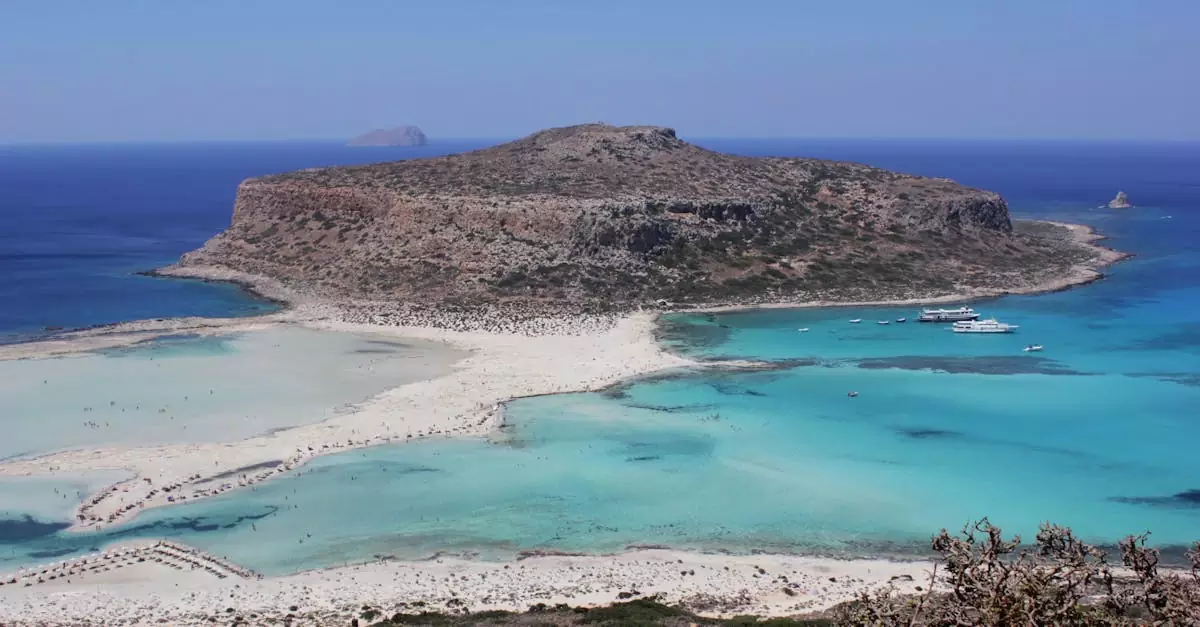
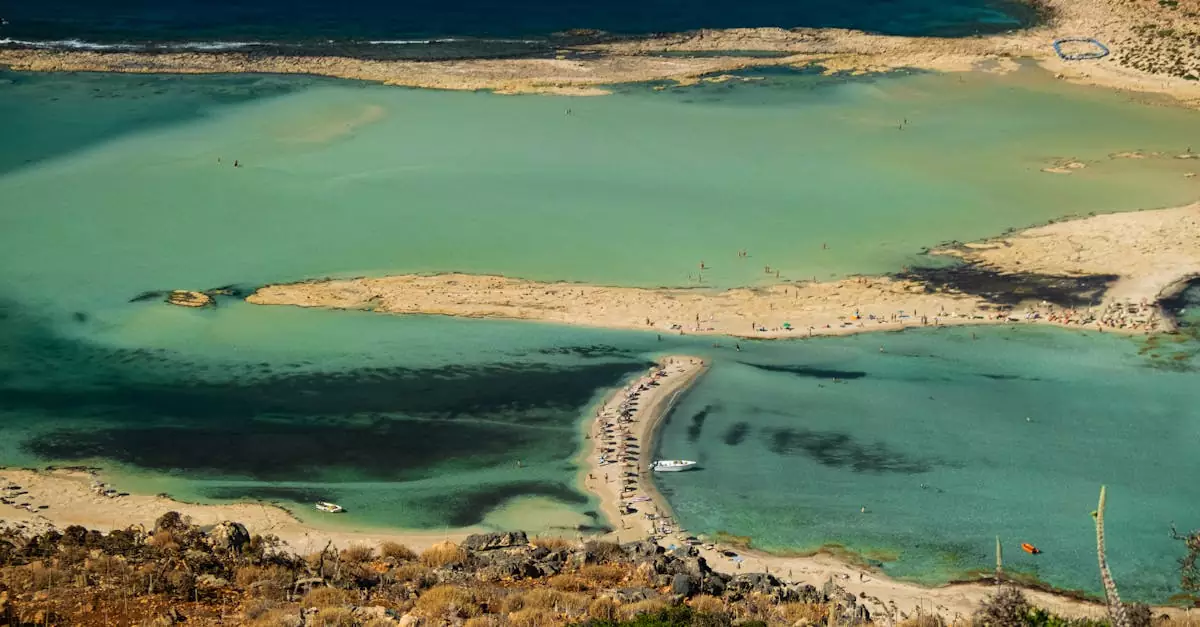
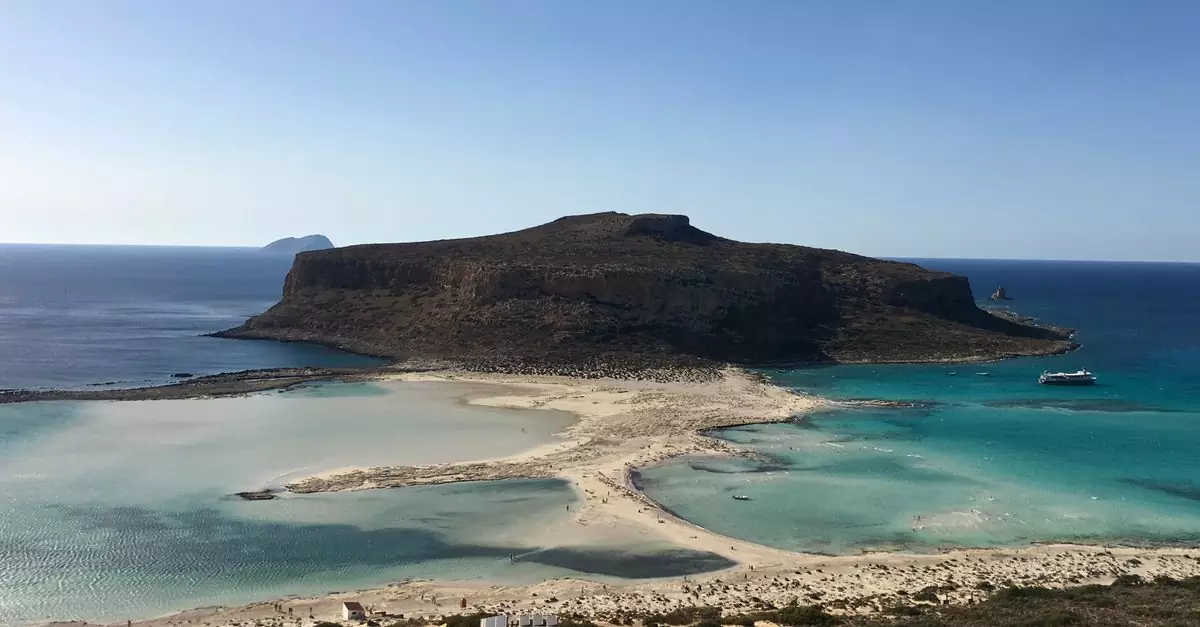
Balos Lagoon, located on the northwestern tip of Crete, is a stunning natural paradise characterized by its shallow, warm, and vibrantly turquoise waters. The lagoon forms where three seas meet, creating a unique ecosystem with diverse marine life. A long stretch of fine sand connects the mainland to the small island of Gramvousa, featuring the remains of a Venetian fortress.
Access to Balos can be challenging but rewarding. Many visitors opt for a boat trip from Kissamos, which also stops at Gramvousa Island. Alternatively, a rough dirt track leads to a parking area, followed by a hike down to the lagoon. The effort is well worth the breathtaking views and the chance to swim in the exceptionally clear, shallow waters.
- Best for: Nature lovers, families with young children, those seeking serene beauty.
- Getting there: Boat trip from Kissamos or a combination of car and hike.
- Considerations: The hike down can be steep; wear appropriate footwear.
When is the Ideal Time to Visit Greece’s Best Beaches?
Timing your visit to Greece can significantly enhance your beach experience, balancing ideal weather with manageable crowds. The country boasts a Mediterranean climate, offering a long season for enjoying its stunning coastlines.
Best Months for Sunbathing and Swimming
The prime time for sunbathing and swimming at Greece’s best beaches is from June to September. During these months, the weather is consistently hot and sunny, with sea temperatures reaching their warmest, typically between 23°C and 27°C (73°F to 81°F). July and August are the hottest, with temperatures often exceeding 30°C (86°F). This period offers the classic Greek island experience, with long daylight hours perfect for maximizing your time by the sea. Many islands, like Crete and Rhodes, are at their most vibrant during this time, with lively tavernas and water sports readily available.
Shoulder Season Perks: Fewer Crowds, Pleasant Weather
For travelers who prefer a more relaxed atmosphere and milder temperatures, the shoulder seasons of May and September offer compelling advantages. May sees temperatures averaging around 20-25°C (68-77°F), with the sea already warm enough for comfortable swimming. The landscape is lush and blooming, making it a beautiful time to visit islands like Santorini or Corfu before the intense summer heat arrives.
September is often considered one of the best months. The sea retains its summer warmth, while the intense heat of August subsides, making daytime exploration more enjoyable. Crowds begin to thin out significantly after the school holidays end, leading to more tranquil beach experiences and potentially lower accommodation prices. This is an excellent time to visit popular spots such as Mykonos or Zakynthos without the peak season frenzy.
Avoiding Peak Summer Heat and Tourist Rush
July and August represent the peak of the summer season in Greece. While offering the hottest weather and the liveliest atmosphere, these months also bring the largest crowds and the highest prices for flights and accommodation. Temperatures can be scorching, making strenuous activity challenging during the midday sun. If you dislike large crowds or are sensitive to extreme heat, it’s advisable to avoid visiting during these two months. Opting for late May, early June, or September and early October will allow you to enjoy the beautiful Greek coastline with greater ease and often at a more budget-friendly cost. Consider visiting less-frequented islands if you must travel in July or August to find more secluded spots.
How to Reach Greece’s Most Stunning Coastal Gems
Accessing Greece’s diverse coastline, from the famed shores of the Cyclades to the hidden coves of the Ionian Islands, involves a mix of air and sea travel. Planning your route in advance is key to a smooth journey, especially when aiming for islands with fewer direct connections.
Island Hopping: Ferry Routes to Popular Beach Destinations
Ferries are the lifeblood of island travel in Greece, connecting the mainland with its numerous islands and linking the islands to each other. Major ports like Piraeus in Athens, Rafina, and Lavrio serve as hubs for routes to popular archipelagos such as the Cyclades, Dodecanese, and Saronic Islands. For instance, reaching Mykonos or Santorini typically involves a high-speed or conventional ferry from Piraeus.
Booking ferry tickets in advance is highly recommended, especially during peak season (June to August) and for popular routes. Websites like Ferryhopper or Greek Ferries allow you to compare schedules and prices. Consider the travel time; conventional ferries are slower but often more affordable and offer a chance to enjoy the sea views, while high-speed options significantly cut down journey times.
| Destination Island | Main Port of Departure | Typical Ferry Type | Approximate Travel Time |
|---|---|---|---|
| Santorini | Piraeus (Athens) | High-Speed/Conventional | 4.5 – 8 hours |
| Mykonos | Piraeus (Athens) | High-Speed/Conventional | 2.5 – 5 hours |
| Crete (Heraklion) | Piraeus (Athens) | Conventional | 8 – 9 hours |
| Rhodes | Piraeus (Athens) | Conventional | 14 – 18 hours |
| Corfu | Igoumenitsa | Conventional | 1.5 – 2 hours |
Flying into Nearby Airports for Beach Access
For those looking to minimize sea travel or reach more distant islands, flying is often the most efficient option. Athens International Airport (ATH) is the primary gateway to Greece, offering numerous domestic connections to major islands with airports, such as Crete (Chania and Heraklion), Rhodes, Kos, Corfu, and Mykonos. Many other islands also have smaller airports served by domestic airlines like Aegean Airlines and Sky Express.
If your destination is on an island without an airport, you might fly into the nearest island with one and then take a ferry. For example, flying to Rhodes (RHO) allows for easy ferry access to nearby islands like Symi or Kos. Some islands, like Naxos or Paros, have airports but are also well-served by frequent ferries from Athens, making the choice dependent on your budget and time constraints.
Renting a Car or Scooter for Coastal Exploration
Once you’ve reached your chosen island or coastal region, renting a vehicle provides the freedom to explore beyond the main towns and discover secluded beaches. Car rentals are widely available on larger islands like Crete, Rhodes, and Corfu, offering comfort and capacity for families or groups. Booking your rental car in advance is advisable, especially during peak tourist seasons.
On smaller islands or for shorter distances, renting a scooter or ATV can be a more economical and enjoyable way to navigate winding roads and access beaches with limited parking. Always ensure you have the appropriate driving license and are comfortable with the local driving conditions, which can sometimes be challenging with narrow, hilly roads. Always wear a helmet and drive cautiously to ensure your safety.
Beyond the Sand: Exploring Coastal Villages Near Greece’s Top Beaches
While the allure of Greece’s best beaches is undeniable, the experience is often enriched by the charming coastal villages that lie just beyond the shoreline. These settlements offer a glimpse into local life, provide essential amenities, and serve as convenient bases for further exploration. Pairing a day at a renowned beach with an evening wandering through cobblestone streets or enjoying fresh seafood can transform a simple beach trip into a more profound cultural immersion.
Chania’s Old Town Charm Near Elafonissi
Elafonissi Beach, famous for its pink sand and shallow turquoise waters, is a must-visit on Crete. However, the nearby city of Chania offers a captivating contrast. Its Venetian harbor, lighthouse, and labyrinthine old town are a delight to explore. Spend your mornings at Elafonissi and your afternoons or evenings wandering through Chania’s narrow alleys, discovering artisan shops, and dining at waterfront tavernas.
Getting to Elafonissi from Chania typically involves a bus or a rental car, a journey of about 1.5 hours. Consider visiting during the shoulder seasons (May-June or September-October) to avoid the peak summer crowds and enjoy more pleasant weather. Accommodations range from boutique hotels within Chania’s old town to guesthouses closer to the beach.
Limassol’s Lively Atmosphere Near Navagio
Navagio Beach, also known as Shipwreck Beach, on Zakynthos is iconic, but its accessibility is primarily by boat. For a more grounded coastal experience with a vibrant town nearby, consider the area around Limassol in Cyprus. While not directly adjacent to Navagio, Limassol offers a sophisticated seaside city vibe with historical sites like the ancient Kourion and a modern marina.
Limassol provides a wealth of accommodation options, from luxury resorts to more budget-friendly apartments. Its promenade is perfect for evening strolls, and the city boasts a lively nightlife and diverse culinary scene. Day trips to more secluded coves and beaches along the southern coast are easily arranged from here. Transportation around Limassol is straightforward with local buses and readily available taxis.
Assos Village: A Picturesque Base for Myrtos Beach
Kefalonia boasts numerous stunning beaches, with Myrtos often topping the list. For travelers seeking a tranquil and visually stunning base, the village of Assos is an excellent choice. This small, colorful village is nestled on a peninsula, offering breathtaking views and a peaceful ambiance. It’s a short drive from Myrtos, allowing for easy access to the famous beach without the need to stay in a larger, busier town.
Assos itself is a destination, with its Venetian fortress ruins perched above the village and its charming harbor. Accommodation here is limited, often comprising small guesthouses and apartments, so booking in advance is recommended, especially during summer. The village’s intimate scale makes it ideal for those looking to unwind after a day at the beach.
Adamas Port: Gateway to Milos’ Coastal Wonders
Milos is renowned for its unique volcanic landscapes and diverse coastline, featuring beaches like Sarakiniko and Kleftiko. The main port town of Adamas serves as the primary hub for visitors, offering a convenient starting point for island exploration. From Adamas, you can easily access boat tours that visit Kleftiko’s sea caves and arrange transportation to various beaches scattered across the island.
Adamas offers a range of accommodations, from simple rooms to hotels, and a good selection of tavernas and shops. Renting a car or ATV is highly recommended for exploring Milos independently, as public transport can be limited to key locations. The port’s bustling atmosphere provides a lively contrast to the more serene beaches, making it a practical and engaging base for discovering the island’s geological marvels.
What Local Greek Delicacies Should You Try by the Sea?
Experiencing the best beaches in Greece isn’t just about stunning scenery; it’s also a culinary journey. The coastal regions offer a distinct gastronomic experience, heavily influenced by the bounty of the Aegean and Ionian Seas. From casual seaside tavernas to more refined dining, these local flavors are an integral part of the Greek island experience.
Freshly Grilled Seafood in Coastal Tavernas
One of the most quintessential seaside dining experiences in Greece involves freshly caught seafood. Many coastal villages boast small, family-run tavernas where the day’s catch is prepared simply and deliciously. Look for tavernas displaying their fresh offerings, often on ice near the entrance. Grilled octopus, calamari, and sea bream (tsipoura) are perennial favorites, typically prepared with a drizzle of olive oil, lemon juice, and a sprinkle of oregano, allowing the natural flavors of the seafood to shine.
Pairing your grilled fish with a side of Horta (wild greens, often boiled and dressed with lemon and olive oil) provides a healthy and authentic accompaniment. These tavernas are typically found right on the water’s edge, offering the perfect backdrop for a relaxed lunch or dinner. Prices can vary, but a main course of grilled fish often ranges from €15-€25, depending on the type of fish and its weight.
Must-Try Greek Salads and Mezedes
Beyond the main courses, no Greek seaside meal is complete without sampling a variety of salads and mezedes (small plates). The classic Greek salad, or Horiatiki, is a refreshing blend of ripe tomatoes, cucumbers, onions, Kalamata olives, and feta cheese, all generously dressed with local olive oil and oregano. It’s a staple that tastes even better with the salty sea air.
Other popular mezedes to share include Gavros Marinatos (marinated anchovies), Taramasalata (a creamy dip made from fish roe), and Fried Zucchini (kolokythia tiganita). These small dishes are perfect for grazing while enjoying the view. Ordering a selection of mezedes allows you to taste a wider range of local flavors and is a fantastic way to experience the communal spirit of Greek dining. Many tavernas offer a “meze platter” for a set price, which can be a good value for trying multiple items.
Refreshing Local Wines and Ouzos for Beachside Relaxation
To complement your meal and enhance the relaxed beachside atmosphere, consider sampling some local beverages. Greek wines have a long history, and many islands produce their own distinctive varieties. A crisp white wine, such as an Assyrtiko from Santorini or a Robola from Kefalonia, pairs excellently with seafood. For those who prefer something stronger, Ouzo is a traditional anise-flavored aperitif often served with mezedes.
When ordering Ouzo, it’s typically served with ice and a small amount of water, which turns the clear liquid a milky white. It’s best enjoyed slowly, allowing you to savor the unique flavor and the moment. Many beachfront bars also offer refreshing cocktails and local beers, providing a wide range of options for a leisurely afternoon or evening by the sea. Enjoying these drinks responsibly is key to a pleasant travel experience.
Frequently Asked Questions About Greece’s Best Beaches
Are Greece’s best beaches accessible for families with young children?
Many of Greece’s best beaches cater well to families. Look for sandy shores with shallow, calm waters, common on islands like Naxos and Crete. Beaches with amenities such as sunbeds, umbrellas, and nearby tavernas are also convenient. Some, like Elafonissi Beach in Crete, even feature shallow, warm lagoons ideal for toddlers.
What are the best beaches in Greece for snorkeling or diving?
For excellent snorkeling and diving, consider the waters around Zakynthos, particularly the Shipwreck Beach area (though access is regulated). The Aegean Islands, such as Milos with its volcanic rock formations and clear waters, offer great underwater visibility. Myrtos Beach in Kefalonia, while stunning above water, also provides opportunities for exploring marine life along its rocky edges.
Are there any hidden gem beaches in Greece worth discovering?
Greece is full of secluded coves waiting to be found. On Crete, beaches like Kedrodasos, near Elafonissi but less crowded, offer a wilder, natural beauty. The small island of Koufonisia in the Cyclades boasts pristine beaches with turquoise waters, such as Pori Beach. For those willing to venture, Fteri Beach in Kefalonia, accessible mainly by boat or a hike, remains a tranquil escape.
What should I pack for a beach vacation in Greece?
Essential items for a Greek beach trip include high SPF sunscreen, a wide-brimmed hat, and sunglasses to protect against the strong Mediterranean sun. Bring a reusable water bottle to stay hydrated and reduce plastic waste. Pack light, quick-drying beach towels, a good book, and comfortable sandals or flip-flops. If you plan on visiting more remote coves, consider water shoes for rocky terrain. Don’t forget a waterproof phone case for capturing memories.